
This evening, as I wrapped up my work, the sky was blanketed with clouds, and a light fog had settled in. I had completed all my farming and gardening tasks for the day. The rain had come and gone in bursts throughout, leaving the atmosphere heavy and overcast. With the day’s chores behind me, the evening was perfect for photography.
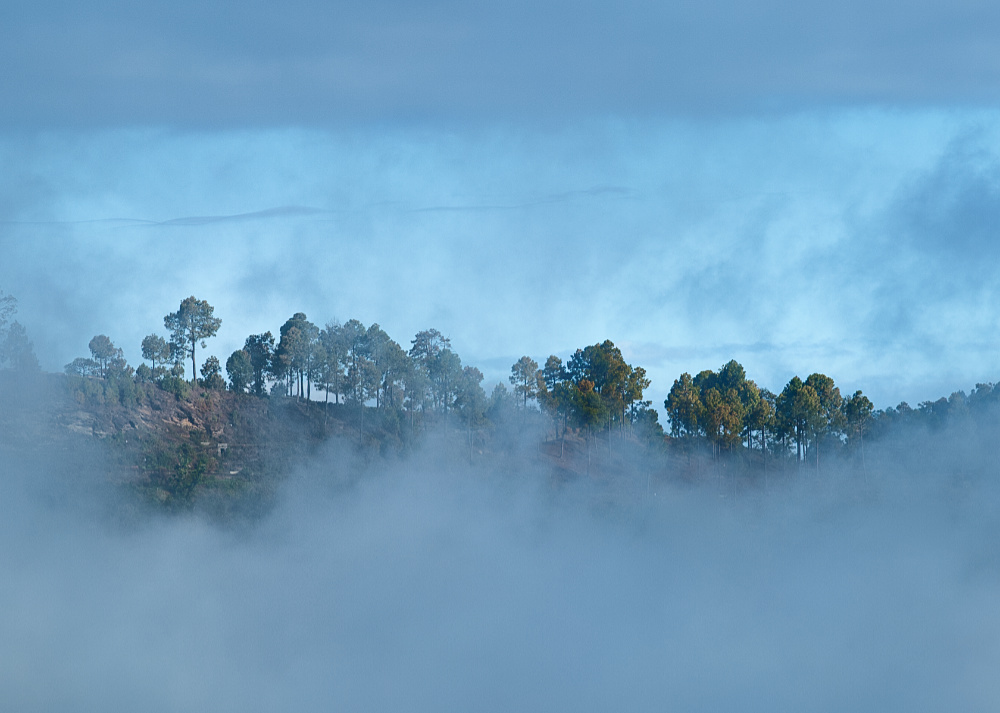
(Distant trees through a gap in floating clouds)
The clouds were dark in some spots, but overall, the sky was simply overcast. For a photographer like me, an overcast sky is a treasure. The soft, diffused light it provides illuminates everything evenly—no harsh highlights, no deep shadows. It makes photographing much easier. With an overcast sky, only two minor adjustments are needed in your settings.
First, adjust the white balance. Overcast light has a cooler color temperature than daylight. If you’re shooting in RAW, you can correct this in post-processing unless you prefer accurate color temperature on your preview screen or if you use software that starts with your camera’s settings. And no, I’m not a fan of shooting in JPEG, so don’t even ask. If you’re still shooting in JPEG, switch to RAW as soon as possible.
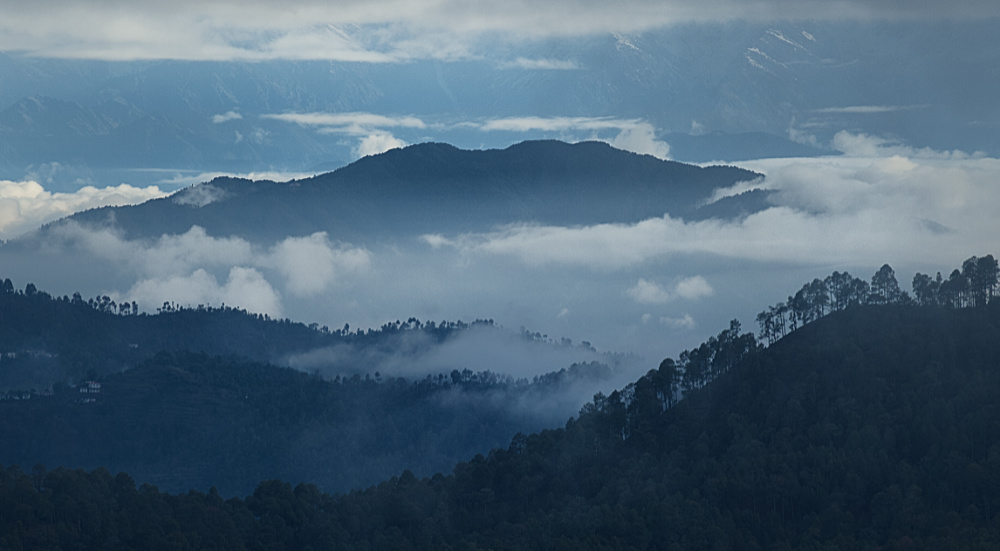
(Floating Clouds – they hid the snow-peaks behind them)
The distant hills were obscured by a thick layer of clouds. While landscapes typically lack drama under an overcast sky, I was determined to capture something unique. I decided to photograph landscapes in these conditions, knowing that while soft lighting is ideal for portraits and macro shots, it takes more effort to make landscapes stand out.
Usually, I recommend carrying just one or two lenses, but today I packed three in my camera bag: a 25mm prime, a 50mm prime, and a 135mm prime. My affinity for prime lenses has remained unchanged over the years. I find them lighter, sharper, and better for refining my compositions compared to zoom lenses. Though I’ve owned zooms from time to time, I always end up selling them—they just don’t hold my interest. To give you some perspective, my oldest prime lens (bought secondhand) was made before I was born, and it’s still remarkably sharp compared to many modern lenses.
As the wind started to pick up, I suspected there might be more rain tonight. Tomorrow, I need to repair the roof—one of the sheets is loose and keeps flapping in the wind. I hope it doesn’t get blown away tonight. A blue-whistling thrush has taken up residence under the roof in one corner, watching the flapping sheet with curiosity. My thoughts go out to her: don’t worry, I’ll fix it tomorrow.
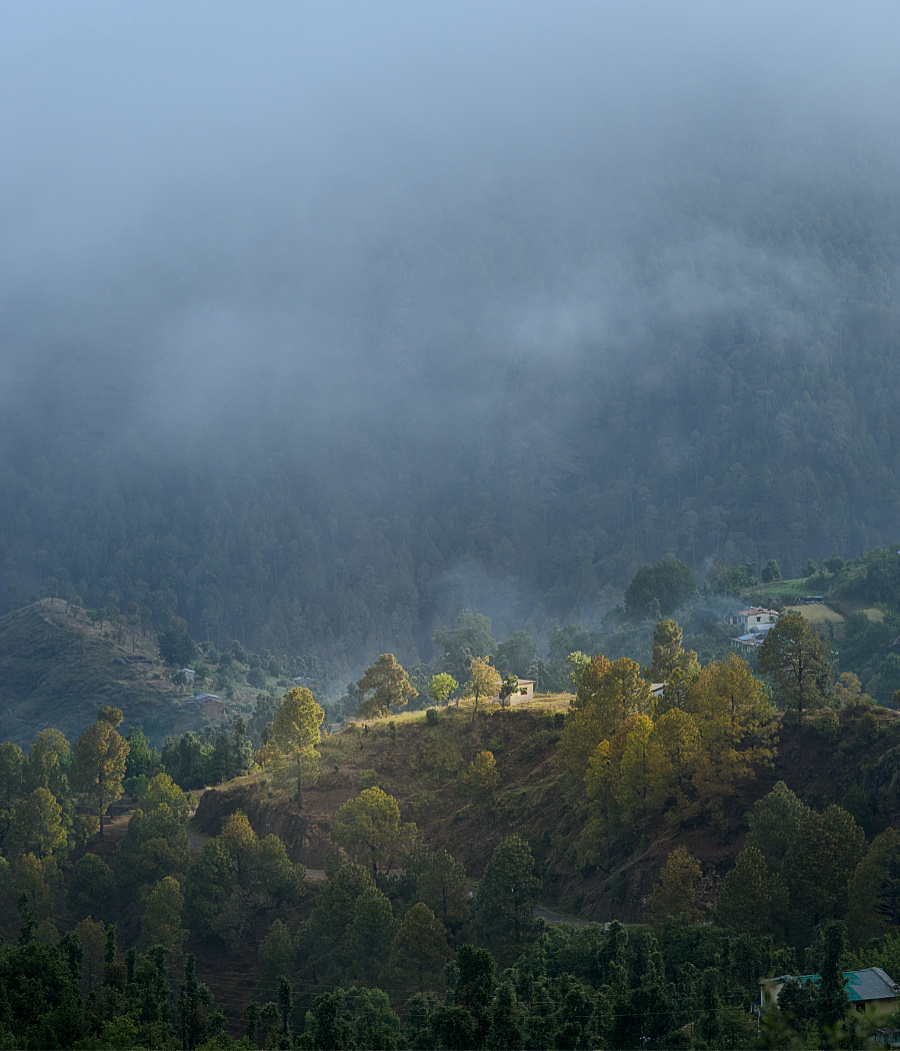
(Just another cloudy day!… and yet mesmerizing. This was a dream come true for most time-lapse video creators. Clouds moving around slowly and the landscape changing from moment to moment.)
The clouds drifted in and out of the valley, transforming the scene with every passing moment. For me, a landscape must have something to say; without that, there’s no point in capturing it. It’s a habit I’ve kept from my film days—I still prefer to wait for the elements to align before pressing the shutter. The nearby clouds were shifting to the sides, revealing breaks in the overcast sky. In just a few more minutes, the landscape would become truly compelling.
I snapped some shots of the clouds floating by, then turned my lens to the distant hills. They looked stunning with the interplay of light and shadow. Even the terrace farms took on a different character in this light. Here’s another of my attempts at capturing a terrace farm in the evening light. The patches of shade from the low-hanging clouds created beautiful effects. Later, I processed the image to evoke the style of an Impressionist painting.
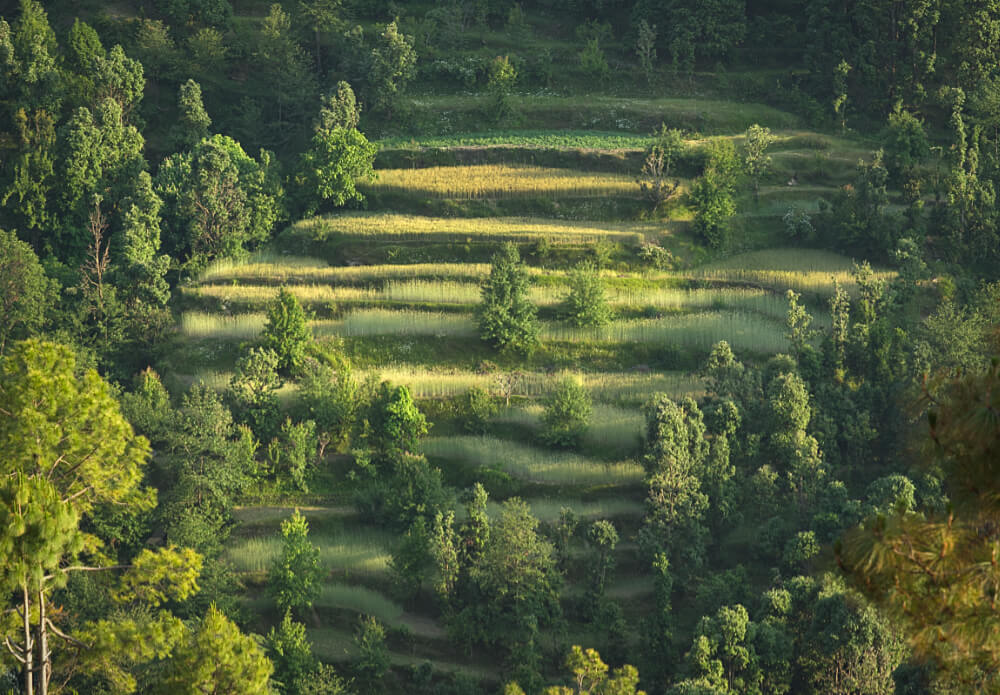
(Terrace Farms processed like a painting. If this kind of processing interests you, write back to me. If there’s a demand for learning how to process raw files in this manner, I can plan on writing an article about this too.)
The sun was now sinking toward the horizon, and the sky was beginning to shift in color. With scattered clouds, a vibrant sunset was almost guaranteed, and this evening was no exception. I began by capturing a series of shots to create some panoramic images. (Panoramas, Snow & Coffee). By the time I finished those shots, the sun had already set. The sky was ablaze with color.
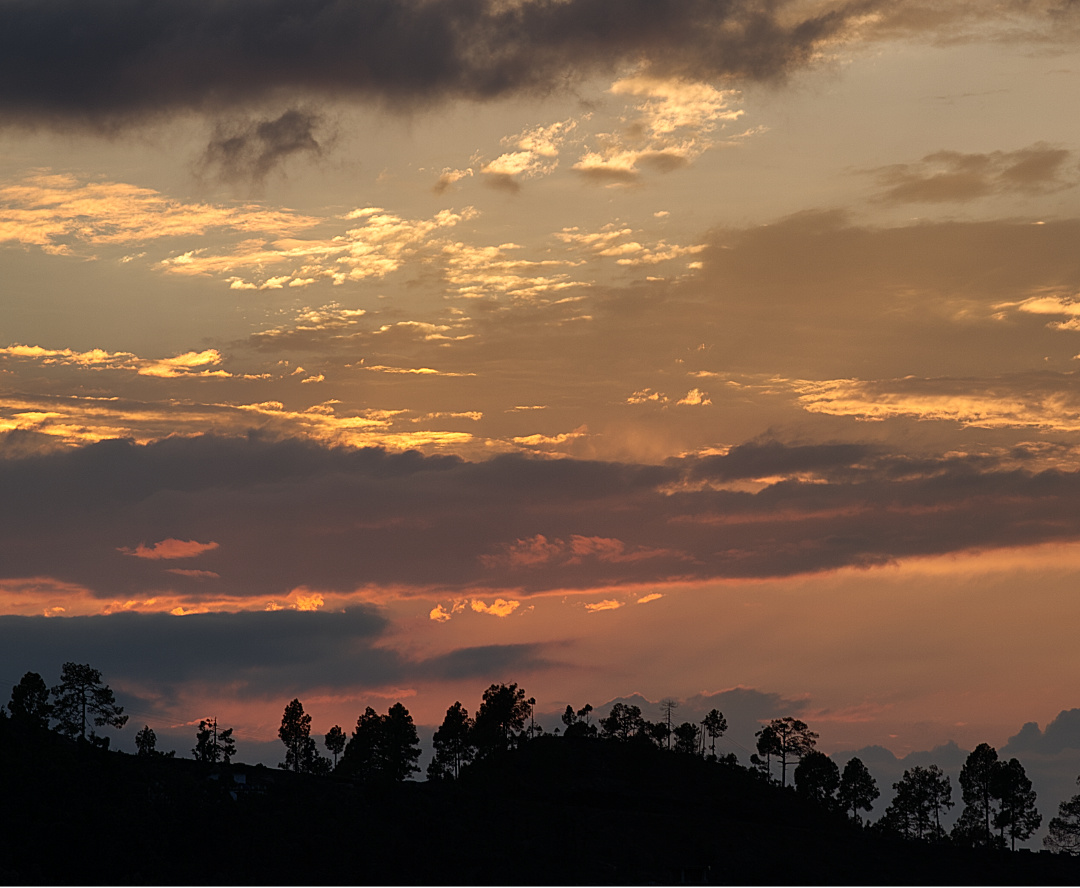
(One of the many sunset photographs, that I captured in the evening.)
Soon, darkness fell, and the wind picked up speed. A light drizzle began to fall. The lights in the valley had come on long ago, and everyone was indoors with their families. It was time for me to head inside as well. The blue-whistling thrush had settled into her corner for the night. First thing tomorrow, I need to fix that flapping sheet—I don’t want water dripping into my living room, nor do I want to disturb the bird. After all, she’s become a quiet companion whenever I sit at my desk to write.
For many more photographs from the evening, check out the Instagram stream of our homestay: Instagram.com/hillcottages
Further Reading:
When the clouds clear up!
Panoramas, Snow & Coffee
This article, originally published on my photography site, is now archived here; while some details may have lost their original context over time, it still offers an intriguing read.
Complete list of archived content – Photography Articles
Discover more from Maini's Hill Cottages
Subscribe to get the latest posts sent to your email.

I absolutely love photography and one day hope to learn more and start taking my own. So I hope to find a teacher such as you 😉
The landscapes in overcast light were great, particularly the Floating Clouds photo.
The terrace farms seem to be 3 dimensional, like I could touch them!
LikeLike