
For the past few days, snow has been falling steadily outside, keeping me indoors with little to occupy my time. Downstairs, a crackling fire attempts to ward off the chill, but its warmth feels insufficient. Wrapped in a cozy blanket, I clutch a steaming cup of hot chocolate, while my feet rest on a comforting hot water bottle. Despite these comforts, my fingers still feel the cold as I type. It’s unmistakably the heart of winter here.
I recently had a discussion with my daughter, who has developed a keen interest in photography. She suggested embracing the chilly weather and snow by heading outdoors with her camera to capture some photographs. Her ideas are certainly on point.
She suggested capturing the beauty of snow, aiming for a frozen Arendelle vibe inspired by her favorite animation series, ‘Frozen.’ We discussed what that entailed: plenty of fresh, immaculate white snow in vibrant color photos. With her instructions in mind and a vague idea of the Arendelle aesthetic, I geared up to brave the chilly winds and venture outside.
The landscape was a sea of greyish-white. While it felt dreary to me, my daughter saw it differently. She envisioned a winter wonderland with abundant snow and even imagined Olaf, the snowman, frolicking about. It was a beautiful scene through her eyes. I knew I had to adopt her perspective to capture it in photographs. (I wasn’t entirely satisfied with the post-processing, but she adored the results. I’ll share more about that later.)
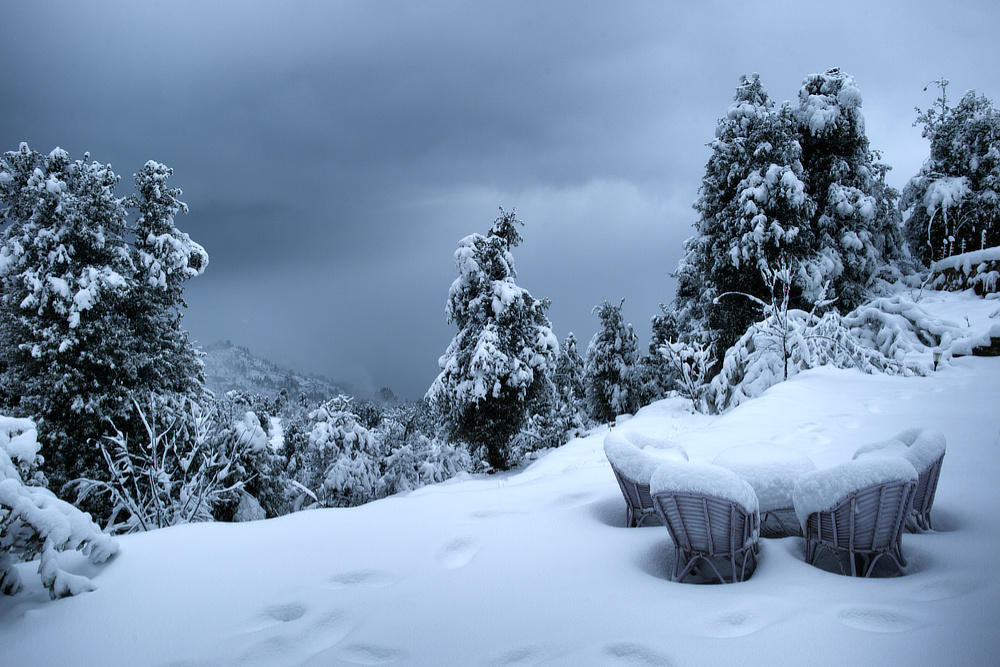
(25mm lens at f/11 and 1/250 sec, metered at -1EV, post-processed in Affinity Photo)
The entire scene appeared almost monochromatic. To make an impact, I knew I needed a dramatic shift in colors. I experimented with capturing photos under a dark cloud cover, which highlighted the snowy foreground. While the resulting image had a striking wintry evening atmosphere, it didn’t quite capture my daughter’s imagination.
It had to be more bluish and with some kind of light that adds beauty. Nature was on my side.
For the next image, the skies opened up a little and a streak of light lit the scene. Overall it was dark and ambient light was less. While using Auto-ISO, the camera had shifted to 720 ISO while using f/8 aperture and 1/30 shutter speed with the Zeiss 25mm lens.
Preview the Histogram
I was using evaluative metering (3D Matrix) but still had to rely on preview screen and histograms to understand the correctness of exposure. The blue histogram was towards the right with +2/3 EV compensation, without any loss of highlights.
When capturing snow photographs, it’s crucial to monitor the histogram, particularly the blue channel. If it starts to clip, consider slightly reducing the exposure. Personally, I often use center-weighted metering and tend to over-expose the image. However, I’ve found that evaluative metering generally provides more reliable results (though not flawless). I lean towards center-weighted metering because it tends to underexpose (averaging white snow to 18% grey), allowing me to compensate by deliberately over-exposing. While 3D Matrix metering or Evaluative metering usually work well, they can struggle in extreme scenes lacking clear white reference points, leading to significant metering errors.
So, my motto – better to stick to a known problem rather than being at the mercy of an unknown factor.
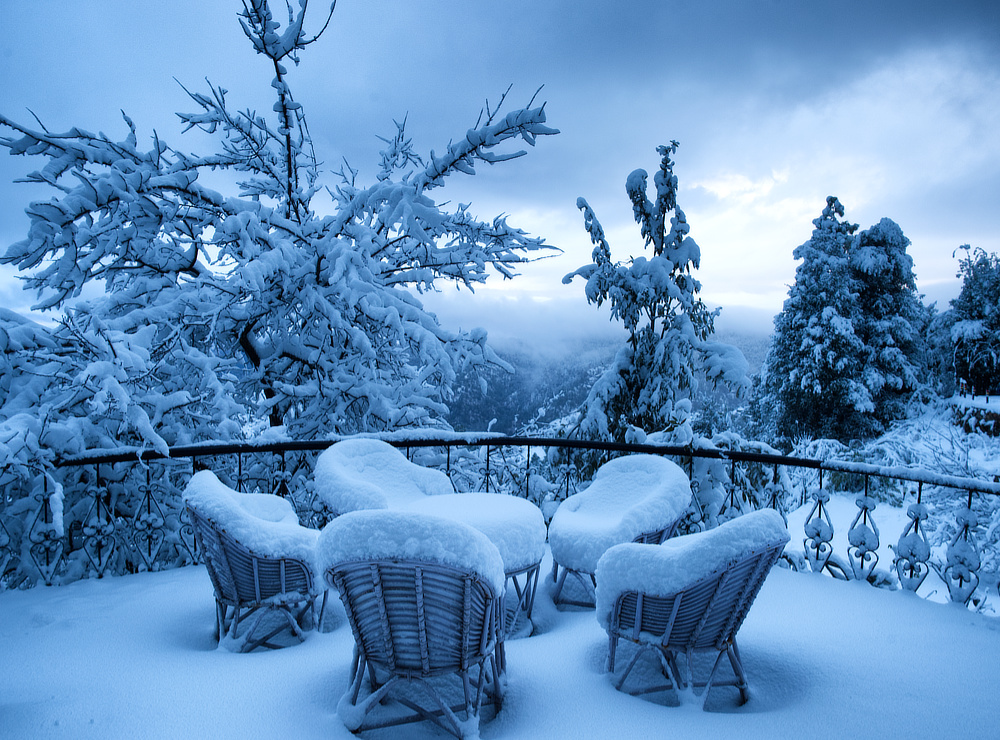
(Deck with Snow )
Now, I was getting the hang of what to click and how to show the landscape. My daughter was also happy. We were turning our home into Arendelle.
Next was our sitting area, nestled under an old apricot tree. It’s usually a delightful spot to relax in the shade during summer. However, it now bore a completely different look. The bare branches were weighed down with snow, and the benches beneath peeked out from their snowy cover. I took the photograph from an elevated position to emphasize the snow-laden tree, while the break in the cloudy sky further enhanced its impact.
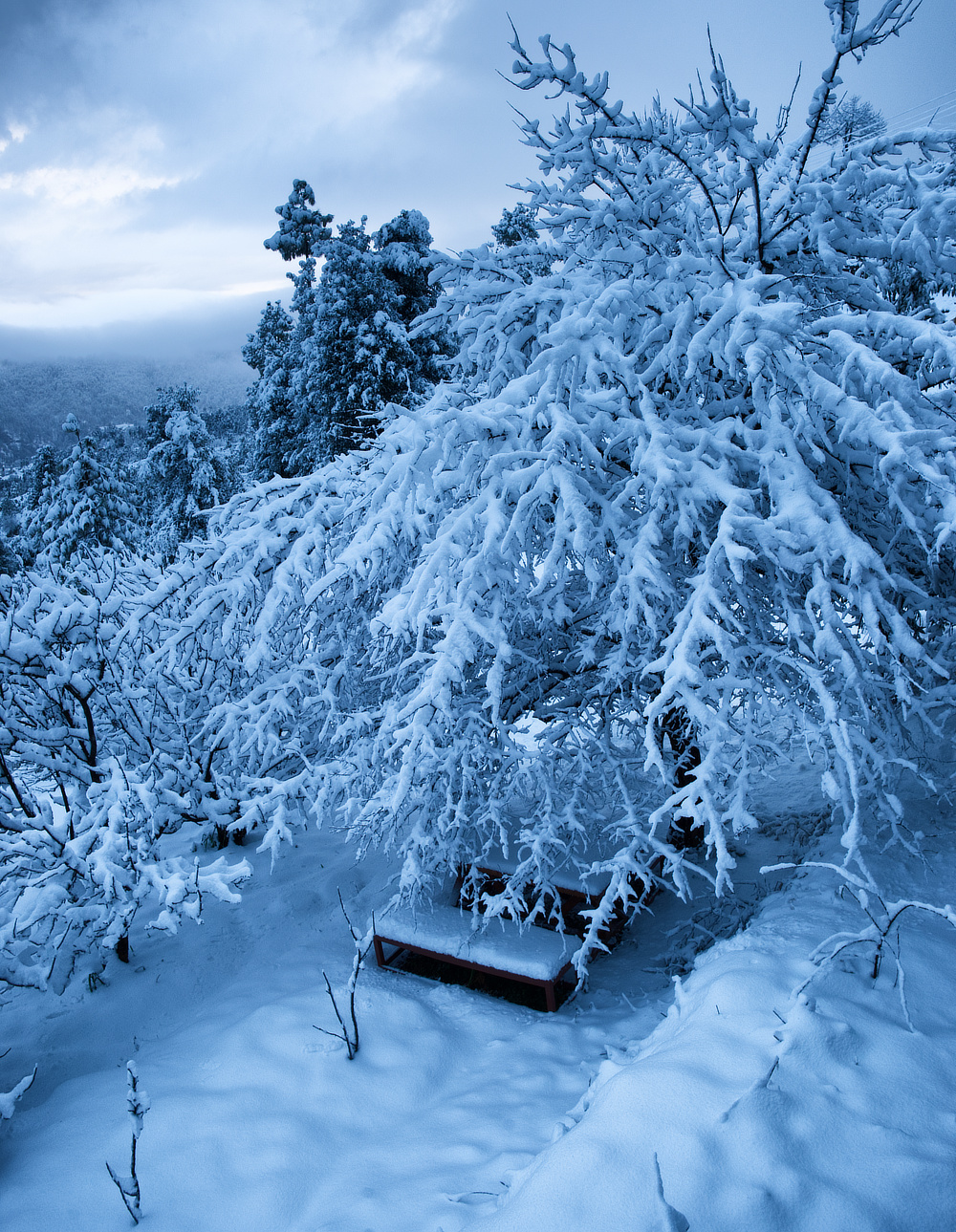
(Snow-laden Apricot Tree, with the sitting area underneath. While post-processing, I worked on the contrast of the mid-tones and increased that, also added a bit of punch using Vibrance Tool)
Post-Processing
While post-processing, I worked on three main things, with frequent instructions from my daughter.
- I corrected the overall exposure using Curves Tool and added more contrast in the mid-tones.
- Corrected the white balance to a cooler tint. This adds the winter touch.
- Increased the Vibrance so as to make the drab looking scene look more impactful.
The evening was beautiful. The sky was as I needed it. The ambient light in its cool shades conveying the winter chill properly. The scene was all set.
I clicked another landscape just to record the scene for future use. Even this turned out nice.
Again with +2/3 EV exposure and Auto-ISO. When technology is there, why not use it? I left the camera to Auto-ISO while keeping an eye on the noise introduced by high ISOs. ( Auto ISO )
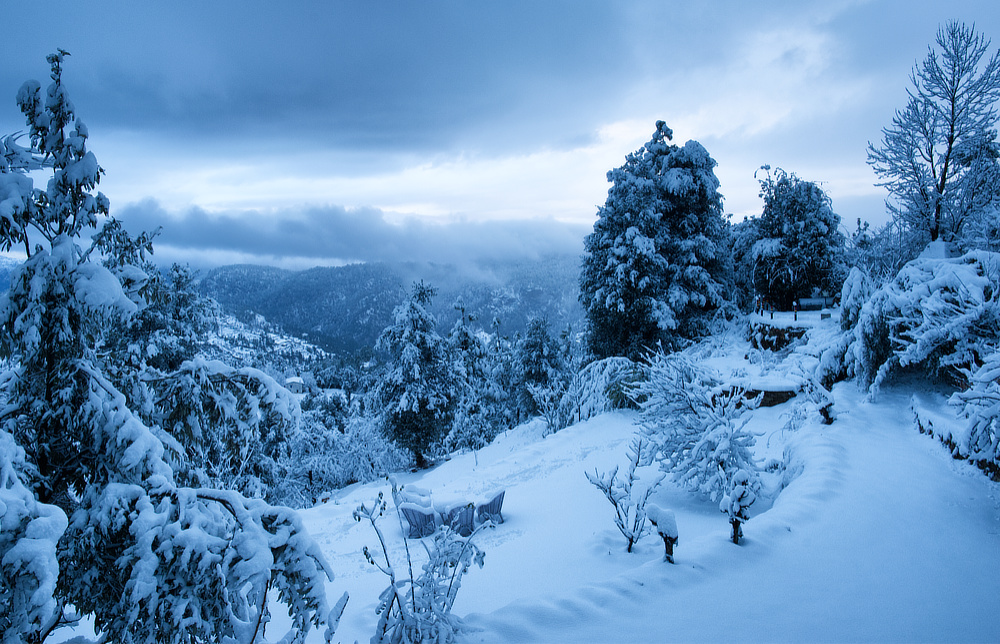
(Winter Wonderland – Nikon Df with Zeiss 25mm lens)
My fingers were growing numb. Despite the allure of the cozy fire indoors, I managed to capture a few photographs outside. Afterward, I retreated back inside.
It was time to watch ‘Frozen II’ with my daughter and enjoy another round of hot chocolate.
We’re fortunate to experience such snowfall occasionally. Life here isn’t always easy, but every situation has its pros and cons—it all depends on perspective. While I felt the chill of a bitterly cold day, my daughter saw a magical winter wonderland. It’s truly a matter of mind over matter.
This article, originally published on my photography site, is now archived here; while some details may have lost their original context over time, it still offers an intriguing read.
Complete list of archived content – Photography Articles
Discover more from Maini's Hill Cottages
Subscribe to get the latest posts sent to your email.

Beautiful clicks and very nice write-up as always.
LikeLike
Sir, you are really a great photographer as well as a writer. Thanks for your sharing these articles to promt us more to do.
LikeLike