
During the rainy season, when the skies are perpetually grey and clouds drift through the valley, there are moments when the cloud cover parts, revealing glimpses of the snow-covered Himalayan peaks. For a photographer, these are precious windows of opportunity. I relish capturing the peaks whenever such a scene unfolds.
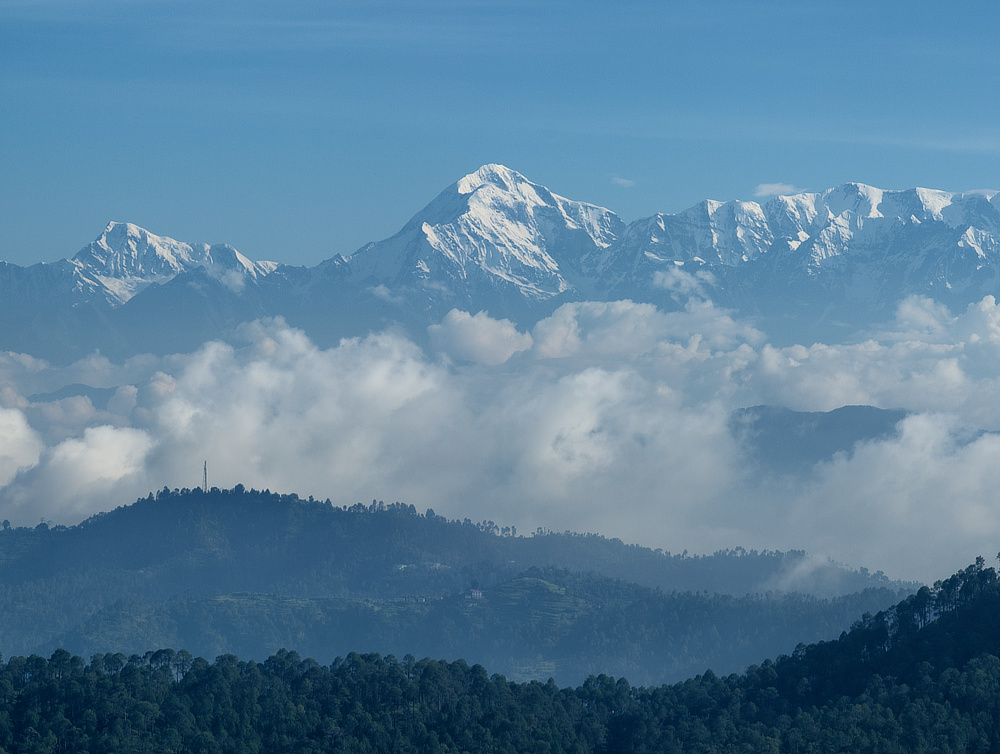
(Trishul peak in the early morning, when after a full night of rains, I woke up to a clear sky. )
My friends often ask me why I take so many photos of these peaks. Sometimes, the photographs don’t seem impactful. The reason is simple: they are mesmerizing and massive. Such a natural wonder compels me to capture them. Everyone who visits me also longs to see these peaks on a clear day and photograph them.
Yes, these peaks may have been photographed thousands of times from every angle, in various lights and seasons. However, for photographers, the joy lies in creating yet another image using our own skills. “I took this photograph when I was there…” This is the statement we all aspire to make. It’s about the thrill of using our own camera, focusing, composing the most impactful subject available, and producing a technically sound photograph. The true fun is in doing it ourselves.
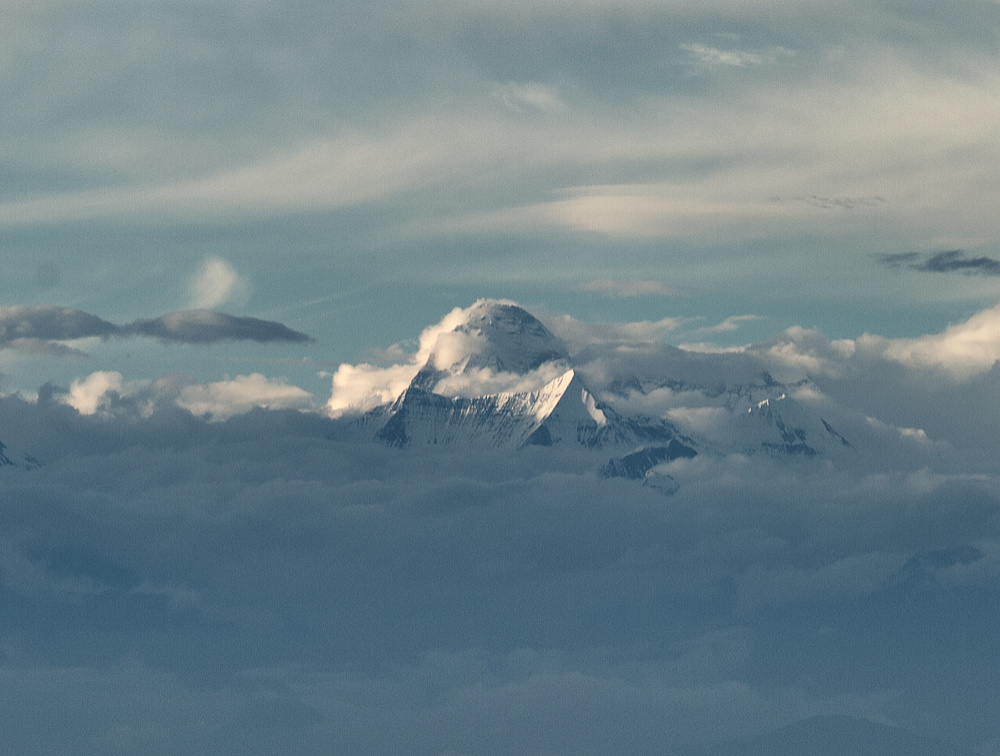
(Nanda Devi in Clouds – Nikon Df with Zeiss 135mm, f/8 and 1/160 sec, heavily cropped and post-processed in Affinity Photo)
This photograph was captured one evening when some friends were visiting. The rain had paused, and we were enjoying a cup of tea as the sun prepared to set. Suddenly, the last few rays of sunlight illuminated the Nanda Devi peak. I had my camera ready with a 135mm lens mounted. There was no time to switch to a higher focal length as the light was changing rapidly. So, I took the shot with what I had and heavily cropped the image later.
These are the times when I long for a high resolution camera of present times, with no anti-aliasing filter.
… and maybe some day manufacturers will come up with a lens with these specifications – a super zoom lens (like 25mm to 800mm) with f/2 aperture, with sharpness and micro-contrast of a high-end prime, and the weight and price of a light-weight kit lens. I know it is asking for a lot. Somehow this seems more difficult than even determining the location and velocity of an object at the same time. Right Mr. Werner Heisenberg?
That’s me going on parallel tracks while dreaming of a high end camera and an impossible lens. Coming back to the theme.
I captured a photograph that I am able to use here and I was also able to relax with my friends, sipping that tea and enjoying the wonderful sunset on that day.
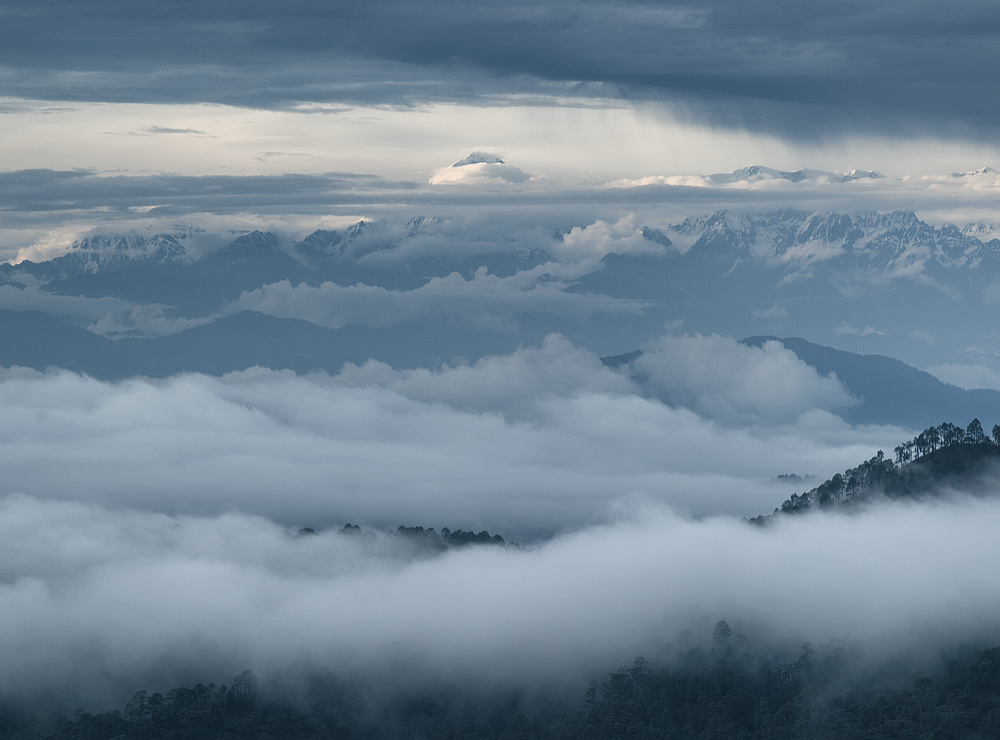
(Sometimes the clouds don’t open up enough to give a view of the snow-peaks but then there are other days when they do)
Sunrises and sunsets are also wonderful times to photograph these peaks.
If the night is clear, the peaks are usually visible in the early morning hours. Once the sun rises and begins to warm the valley, clouds start to form and ascend, obscuring the peaks within minutes. During the rainy season, there’s just a small window of time in the mornings when the peaks can be beautifully photographed.
Sunsets are even more dramatic because of the way the light falls. Even during the rainy season, the peaks sometimes glow with golden and red hues. Alpenglow is particularly fun to photograph, and no number of alpenglow shots ever feels enough. I simply adore the warm colors that these snow-covered peaks take on.
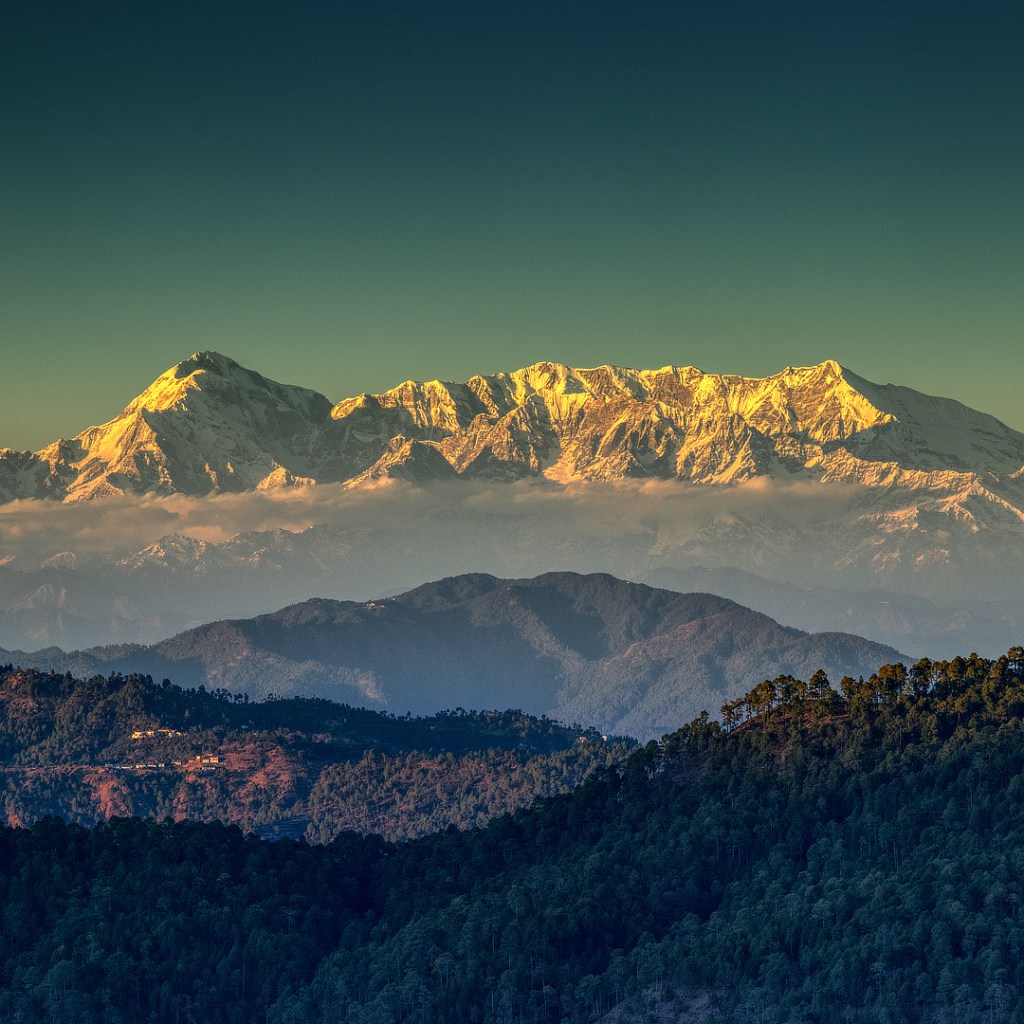
(This one is not exactly from monsoons, but I had clicked this one after it had rained the whole afternoon in late autumn and then suddenly the skies had cleared up.)
Not every photograph needs to be dramatic or impactful. For me, photography is primarily about enjoying the process. Anything that appeals to me is what resonates. I’m not taking these photos for a client or a competition; it’s nourishment for my soul. So, anything that captures my interest is perfect.
This is the same mantra I share with fellow photographers: take photographs to please yourself. Don’t chase after the “ahhs” and “wows” from others. Seeking social validation is futile. Just grab your camera and capture what excites you. It’s your camera, your perspective, and your photograph! Shoot for yourself.
If you happen to be with me when I am busy photographing these peaks, you too get into the act. Capture these wonderful snow-peaks, and get yourself into the ‘zone’.
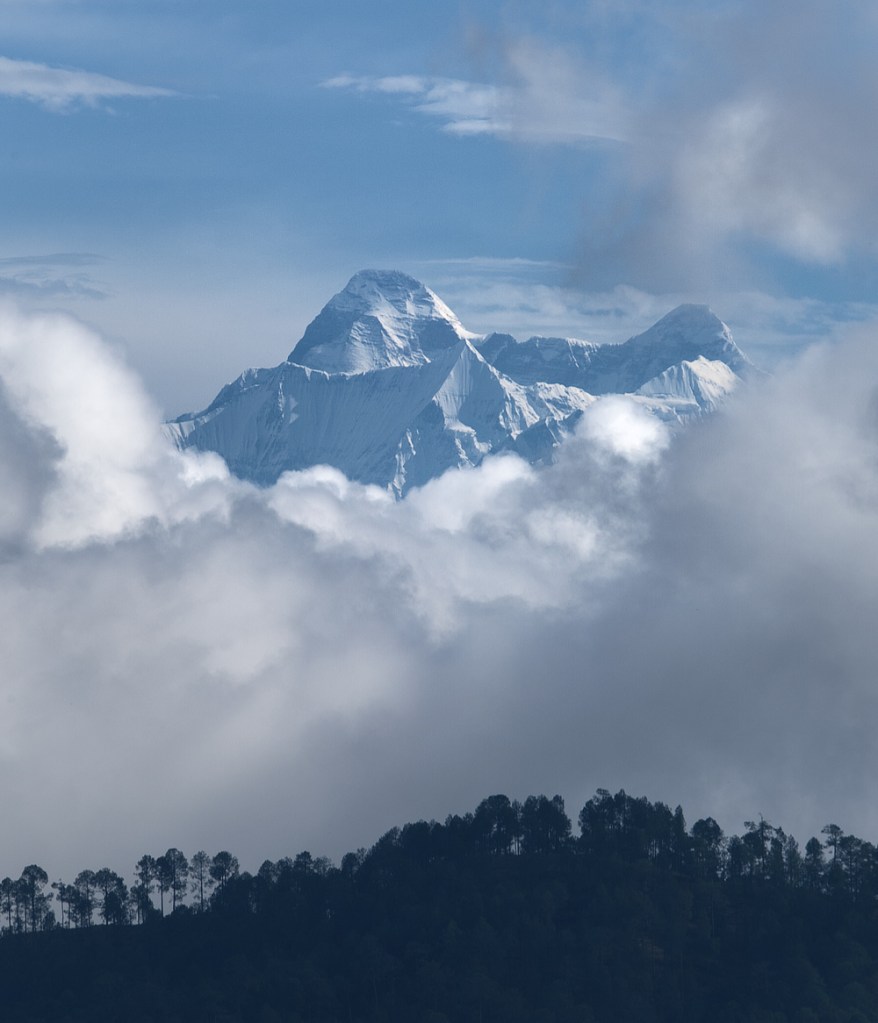
(Nanda Devi peak from behind the clouds. Photographed using Sigma 150-500 mm lens during the last monsoons, while in lockdown! 1/1000 sec, f/8, -1 EV compensation, 100 ISO, evaluative metering)
As I write this article, I can smell delicious cakes baking in the kitchen. What is the rainy season without these treats? Indians love their pakoras, Russians crave pirozhki, and Americans enjoy their fried chicken—me? I love it all. The aroma is overwhelming, so I’m wrapping up this piece and heading to the kitchen to see what’s cooking. It smells like apple pie, the perfect snack for a day like this! I’ll take my camera with me, just in case I spot the peaks during my stroll after snacking.
This article, originally published on my photography site, is now archived here; while some details may have lost their original context over time, it still offers an intriguing read.
Complete list of archived content – Photography Articles
Discover more from Maini's Hill Cottages
Subscribe to get the latest posts sent to your email.
