
For our guests, I wanted to provide a place where the could relax. As I gazed upon the small piece of land in front, I divided between rewilding the place or making it into a lawn. The comfort of our guests won and it was then clear that transforming it into a lush, inviting lawn was the perfect choice. Vivid images swirled in my mind, depicting blissful moments spent reclining on the vibrant grass under a radiant sun. I could almost feel the cool touch of a bottle of beer in my hand, accompanied by soft, melodic tunes drifting through the air. The sky above me played host to graceful clouds, occasionally caressed by a refreshing mountain breeze.
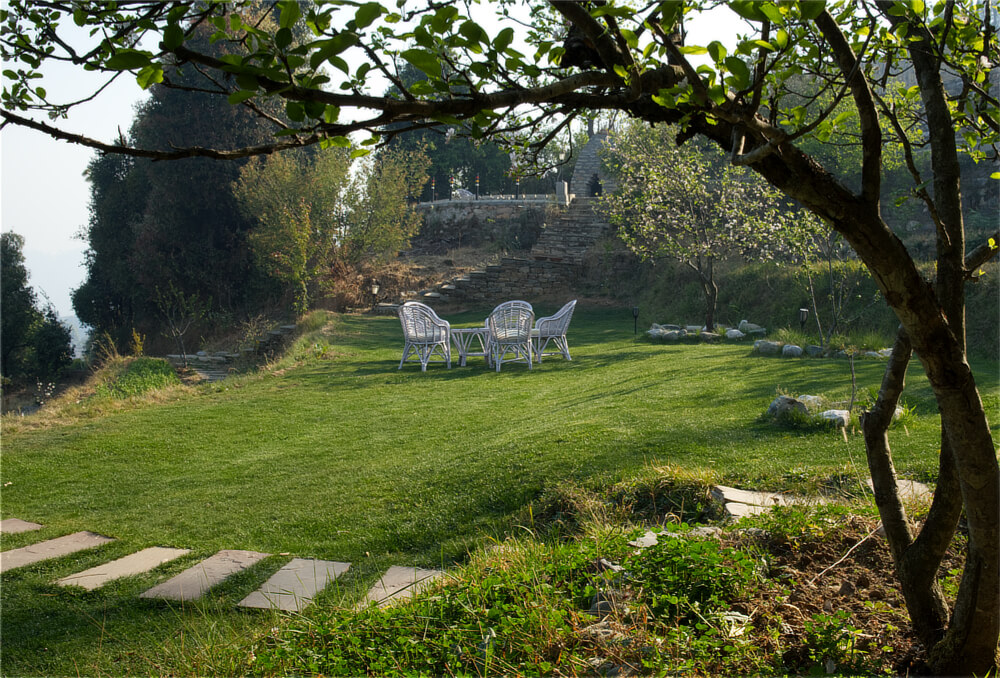
I started working on my lawn and this is how I did it. (The Basics)
The land before me presented a barren sight, adorned with countless rocks and unforgiving, compacted soil. While the idea of a vibrant lawn seemed delightful, the reality I faced was daunting. Nevertheless, I was determined to proceed. The initial task involved painstakingly collecting and relocating the rocks to a designated corner, a process that seemed endless as even smaller rocks continued to emerge, as if from thin air. Despite the arduous labor, the soil began to show signs of promise.
To invigorate the soil, I introduced nourishing manure and planted green peas. Green peas also enriched the soil and I enjoyed the sweet harvest. Once the peas had been reaped, I allowed the remnants to naturally decompose, contributing valuable organic matter to the soil.
Throughout this endeavor, I explored the surrounding area each day, diligently gathering seeds from local cold-season grasses that thrived effortlessly in their natural habitats.
A few days prior to the imminent rainy season, I scattered these collected grass seeds across the freshly prepared land. Weeds had been meticulously removed just days earlier. (In contrast to my previous attempt at establishing a lawn with chemically treated, commercially available seeds — an endeavor that proved unsuccessful and upsetting — the use of locally sourced grass seeds brought a sense of tranquility.)
As predicted, the rain arrived, bestowing its life-giving touch upon the land. Within a mere month, a luxuriant green blanket had enveloped the once-barren ground, with the majority of the seeds sprouting into thriving plants.
Getting the lawn started was easy. The difficult part is maintaining it.

Mowing the Lawn –
Regular mowing is an essential task. According to experts, it is recommended to mow the grass when it has grown by approximately 33% in height. While I may not adhere to this schedule with great precision, I still find myself mowing quite frequently. Perhaps it feels more frequent due to the laborious nature of the task.
Chilled beer is required for mowing. It makes the lawn lush green. I prefer pouring it into a large beer mug and savoring it as a reward for completing the mowing. Trust me, the anticipation of enjoying a refreshing, cold beer after the task encourages me to put in the effort required to create a beautiful lawn.
Keeping the lawn mower’s blades sharp is crucial. Prior to each mowing session, I take a few minutes to sharpen the blades. Sharp blades ensure clean cuts, while dull blades can damage the grass leaves. Investing in a flat-file for this purpose has proven to be one of the best decisions I’ve made for maintaining my lawn.
I opt to mow the grass at a higher height. This is because my lawn serves as a space for relaxation, not a putting green. I typically mow at around 7 cm.
To achieve those neat, professional-looking lines on the lawn, commonly seen on golf courses, I consistently mow in the same direction.
The ideal time for mowing is when the soil and leaves are dry. Personally, I prefer to mow when the sun is high in the sky. During the rainy season, there are occasions when I need to mow the lawn twice a week. The challenge in rainy season is finding the right time slot when the above conditions are fulfilled as much as can be expected during the rains. In the winter, I completely refrain from mowing for a few months.
As for the best type of lawn mower, it ultimately depends on the one you are willing to use consistently. I personally use an electric rotary lawnmower (in fact, powered by solar power, since we generate all our electricity from sun). Previously, I relied on a manual ribbon lawnmower, but its cutting height was limited to about 3 cm, which fell short of my preferences. While I have a small lawn on two different levels, I still dream of owning a ride-on lawnmower complete with a beer bottle holder. Although it may not be practical for my current setup, there’s no harm in dreaming, right? Also for those of you seriously thinking about a ride-on mower- don’t! They are heavy and tend to compact the soil underneath. Mulching lawn mowers, which chop down the cut grass and return it to the lawn, come highly recommended by experts, but I have yet to try them myself.

What Not to Mow
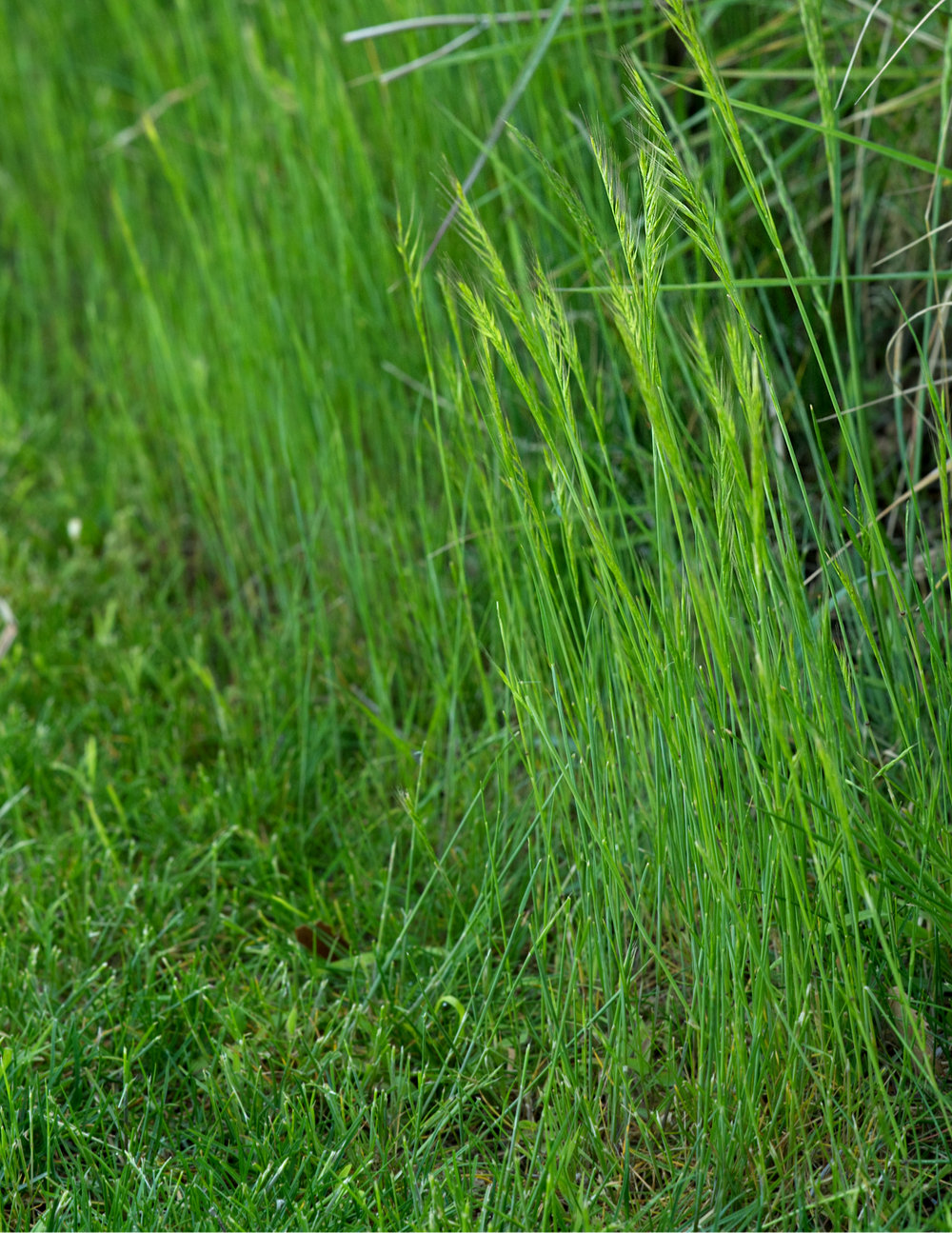
I also leave a small patch untouched, allowing the grass to grow tall and provide me with seeds for any necessary repairs of the bald patches.
Consider creating a neat margin for your lawn—a one-foot-wide belt of “unmowed grass” surrounding the main area. This demarcation significantly enhances the visual impact of the lawn.
This “wild” section of my lawn comprises a mixture of tall grass that is seeding, clovers adorned with abundant flowers, and an assortment of dandelions and various weeds. It has become a haven for bees and ladybirds, with a delightful array of butterflies gracefully fluttering about, making it all the more worthwhile to relax in the lawn.
Seeds from Dutch clover and dandelions do find their way onto my lawn, but who minds them? I will elaborate on this further.
If you have a lawn like mine, it’s important to take care not to mow down these lovely insects. Sometimes, tiny flowers blossom within the lawn, including Dutch clover flowers that open up at ground level, just around the mowing height. These serve as magnets for bees, butterflies, and various insects. It’s crucial to ensure these creatures are not harmed while cutting the grass. I enlist the help of someone who shares my love for nature to gently guide these insects away with a broom, while I mow the grass. (Coincidentally, the best time to cut the grass is when these insects are most active in collecting nectar, so this is all the more important).
Here’s another tip on how to preserve grass seeds- Once the seeds begin to turn yellow-brown, trim the grass earings, allow them to dry under the sun, and store them in a dry container (though not completely airtight). Keep the container in a dry, well-ventilated place. You can use these seeds during the next rainy season. I personally bury the complete grass earings, by making slits in the soil. However, since these seeds are not chemically treated, they are prone to fungus and spoilage. Thus, it’s advisable to collect fresh seeds before the next rainy season for optimal results.
Fertilizing the Lawn –
Maintaining a lush, vibrant lawn requires ample nourishment. Twice a year, I fertilize my lawn with a nutrient-rich compost created from kitchen waste, grass clippings, and dry leaves. However, one challenge I encounter when fertilizing is the rapid growth of trees planted near the lawn, resulting in an abundance of leaves. The impact of this can vary depending on the types of trees surrounding your lawn.
Additionally, I made the decision to incorporate White-Dutch Clover seeds into my lawn. Initially, I was overly focused on achieving a monoculture lawn composed solely of pointed, green grass. However, my perspective has since shifted, and I now appreciate the diverse mixture that has emerged naturally. In fact, this was a common practice decades ago, before chemical companies dominated the market and convinced lawn owners that these plants were undesirable weeds that needed to be eradicated. 2,4-D is the famous chemical that has turned lawns all over the world into chemical storehouses, harmful to both insects and humans.
Me? I am happy with clover growing around with the grass.
Lawn Care –
Watering the lawn during dry seasons is crucial. I recommend adopting a less frequent but deep watering approach. Providing at least 3cm of water per week helps to sustain my lawn when water is scarce.
While thatch removal is often recommended, I haven’t encountered a significant build-up of thatch that necessitates this task. Fortunately, the birds in my area lend a hand in this regard. Russet Sparrows, Jays, Thrushes, and various other species diligently extract thatch on a daily basis to construct their nests. Having a chemical-free lawn also ensures that instead of thatch, I have good quality naturally composted organic material that my lawn relishes. The micro-organisms and earthworms keep my lawn thatch free.
I personally take the time to manually remove weeds. Pulling them out is relatively easy, especially when the soil is moist. However, I intentionally leave a few dandelions scattered throughout the lawn. They add a touch of beauty and break the monotony of green grass. Nevertheless, I ensure to collect the flowers before they have a chance to produce seeds. When it comes to weed control, I am totally against using 2,4-D as it not only kills beneficial clover but also weakens the grass to some extent. Moreover, it is known to have harmful effects on bees and ladybirds, both of which are important for a healthy ecosystem.
What do I do when my lawn is overpowered by dandelions? I consider a dandelion salad! It’s easy when you know it. Good for health, tasty, and the lawn is taken care of. If you are interested, write to me, I’ll share my favorite dandelion salad recipe.
Rollers? I am totally against rollers. That heavyweight compacts the soil in the garb of flattening the bumps. Instead, if there’s a depression, week by week fill it with a mix of sand and fine soil. Experts call it top-dressing.
Aeration is good for the lawn. If you have nothing, then get a rake and try imitating Jackie Chan while you pierce the lawn surface with it. It’s fun once you grasp it. Just don’t overdo it (both acting and aeration).

Pest / Insect Control –
One of the initial challenges my lawn faced was dealing with grubs, which are C-shaped larvae residing in the soil and feeding on roots. While chemical solutions are available, some of which claim to be safe, I have opted for a different approach. I now spray a mixture of neem oil, detergent, and water, which has proven to be effective in combating grubs and improving the condition of my lawn. In cases where certain patches of grass are completely dead, I turn over the soil, allowing birds to feast on the grubs, and then proceed to spray the neem oil mixture before planting new seeds.
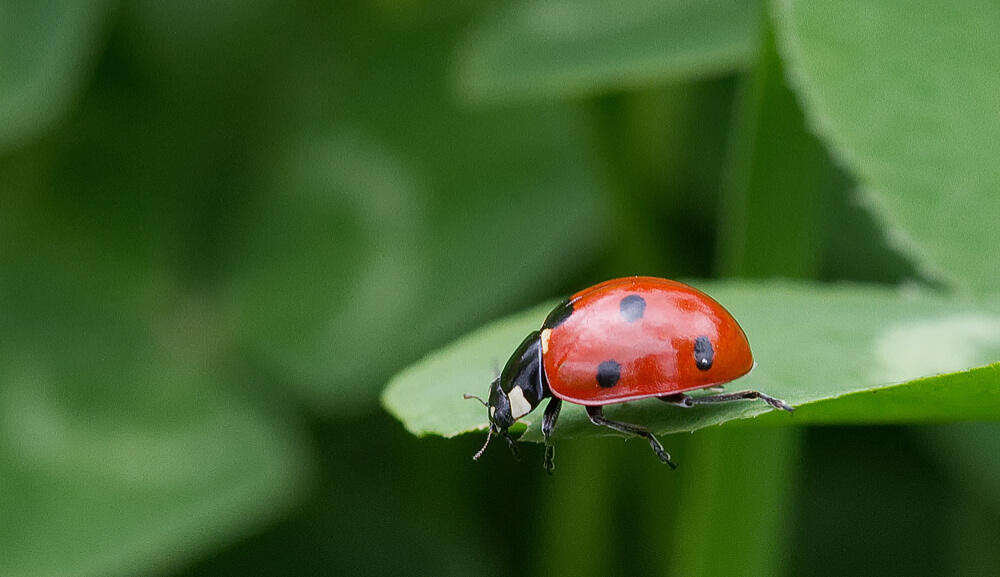
Clovers, which are loved by ladybirds, serve as their habitat. The ladybirds feed on tiny insects like aphids and provide a natural means of pest control.
Birds also contribute to reducing the insect population in my lawn. They enjoy hopping around on the grass, creating a delightful spectacle for both the lawn’s well-being and the bird-watching enthusiast in me.
What not to plant around your Lawn –
It actually doesn’t matter much. Just plant whatever looks good to you but keep these two things in mind-
Think of how your plants and trees will grow. A lawn needs lots of sunshine. There are shade grasses available in the market but the ones I collected from the wild were all growing in sunny spots and so I like to keep my lawn sunny. There are no tall evergreen trees on its south. That’s where the sun goes during winters when my lawn needs the sun most.
Second point – Avoid planting allelopathic plants / trees. Yes, it took me some time to learn that word. Though the grass is tough, various other supportive plants are not. So, be careful. Plant your bottle-brush tree at some distance away from the lawn. It kills the dutch clover and many other weeds. It’s bad for some varieties of grass too.
Seasonal Care
Nothing much to write here. Just go by what the weather and the grass tell you.
In early spring, fertilize the lawn. Don’t be too hasty about it though. Do it when it is time for the grass to grow. Too early, and you may end up with more weeds than grass. Though that is also not a bad thing.
In summers, deep water your lawn.
In rains, keep the height of grass under control.
In early autumn, fertilize again if your grass says so. Yes, you have to learn to understand what the grass says. Let some of the dry leaves (carried to the lawn by the autumn wind) lying around. They will finally end up nourishing the lawn.
Winters? Just keep off the lawn. Especially during frost. The grass can get badly damaged if you walk on the frosted lawn. Also, if you use wood to heat up your home during winters, spread the fine ash on your lawn. Even if it has snowed, spread the ash over. It will give nutrients to your lawn.

A green-green lawn, a dream that I am enjoying.
Now that my lawn is ready and green, I enjoy it. I hate the lawns where the boards read ‘keep off’. yes, too much of foot-fall damages the grass. However, my place doesn’t have so many people all the time and so I don’t have any such boards
To me, the true joy of having a green lawn lies in allowing kids to freely roll and play on it, and in being able to take a peaceful nap with a hat covering my face.
For me, a healthy lawn is one that exhibits a lovely shade of green, with clover scattered around in certain areas and a couple of dandelions basking in the sunlight.
Here’s one last tip: If you’re looking to capture photographs of your lawn, wait for about two days after mowing and watering during the summer, or just one day after mowing during the rainy season. It takes a day or two for the grass to recover from the “mowing stress” and regain its beautiful appearance, ensuring stunning photographs.

Lots of information came flowing my way through Mr. Aashish Vaishnava, someone who helped me understand lawns. Do check out his company – A V Golf Design
IMPORTANT – If you are inspired for a healthy lawn, go ahead with it but if and only if you stay in a region that gets ample amount of rainfall. Don’t grow a lawn if you are going to depend on irrigation. That is wasteful. Grow a patch of wild-flowers instead then and opt for rewilding.
Discover more from Maini's Hill Cottages
Subscribe to get the latest posts sent to your email.
