
Perched atop a picturesque hill, the enchanting Vindhyavasini Devi Temple awaits, offering breathtaking panoramic views in every direction. This divine sanctuary is a mere 28 kilometers away from our homestay.
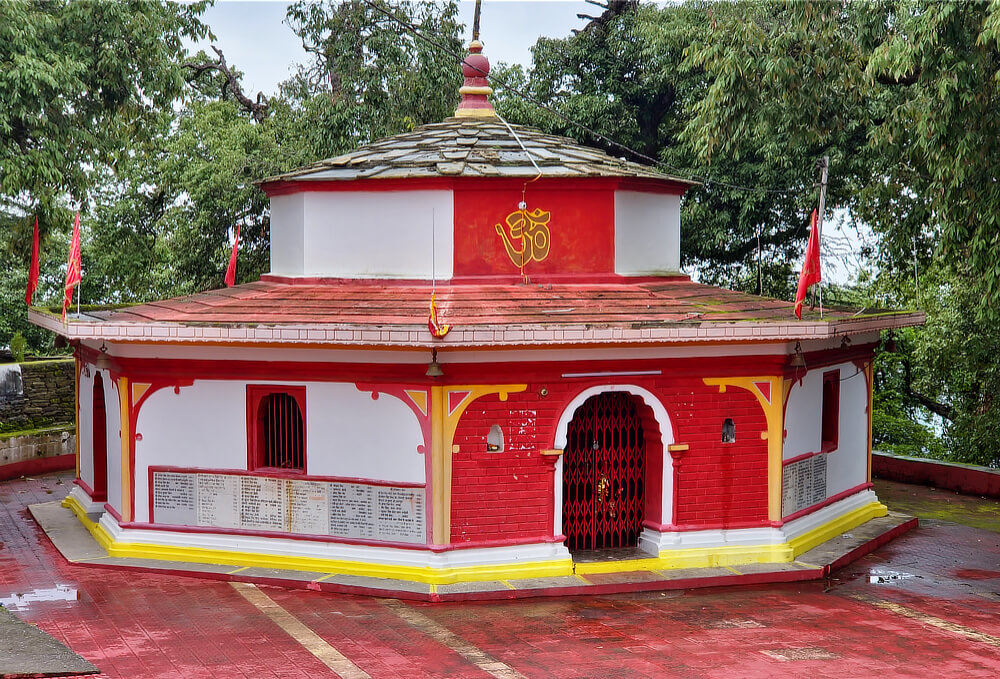
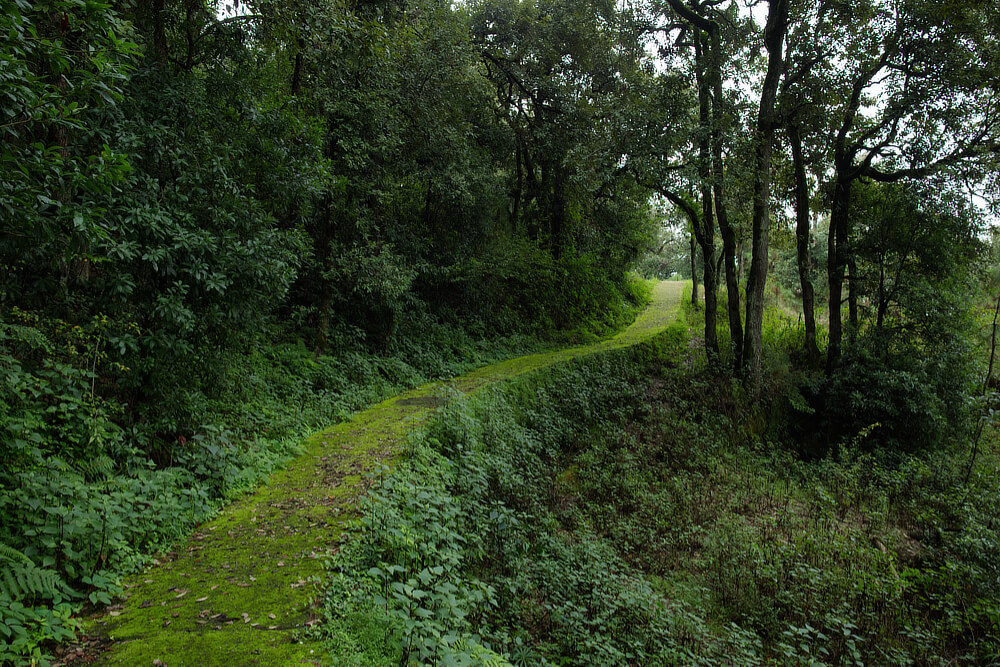
To reach this spiritual haven, a brief trek from the road leads to the hill’s summit. The majority of the pathway is meticulously cemented or adorned with stone. This journey unfolds through a lush, dense forest, a testament to Mother Nature’s exquisite beauty. In the monsoon season, the forest adorns itself with lush ferns, and whimsical mushrooms occasionally peek through the undergrowth. The cemented path, adorned with soft moss, provides a comfortable walk, although occasionally, distant vistas may be veiled by drifting clouds.
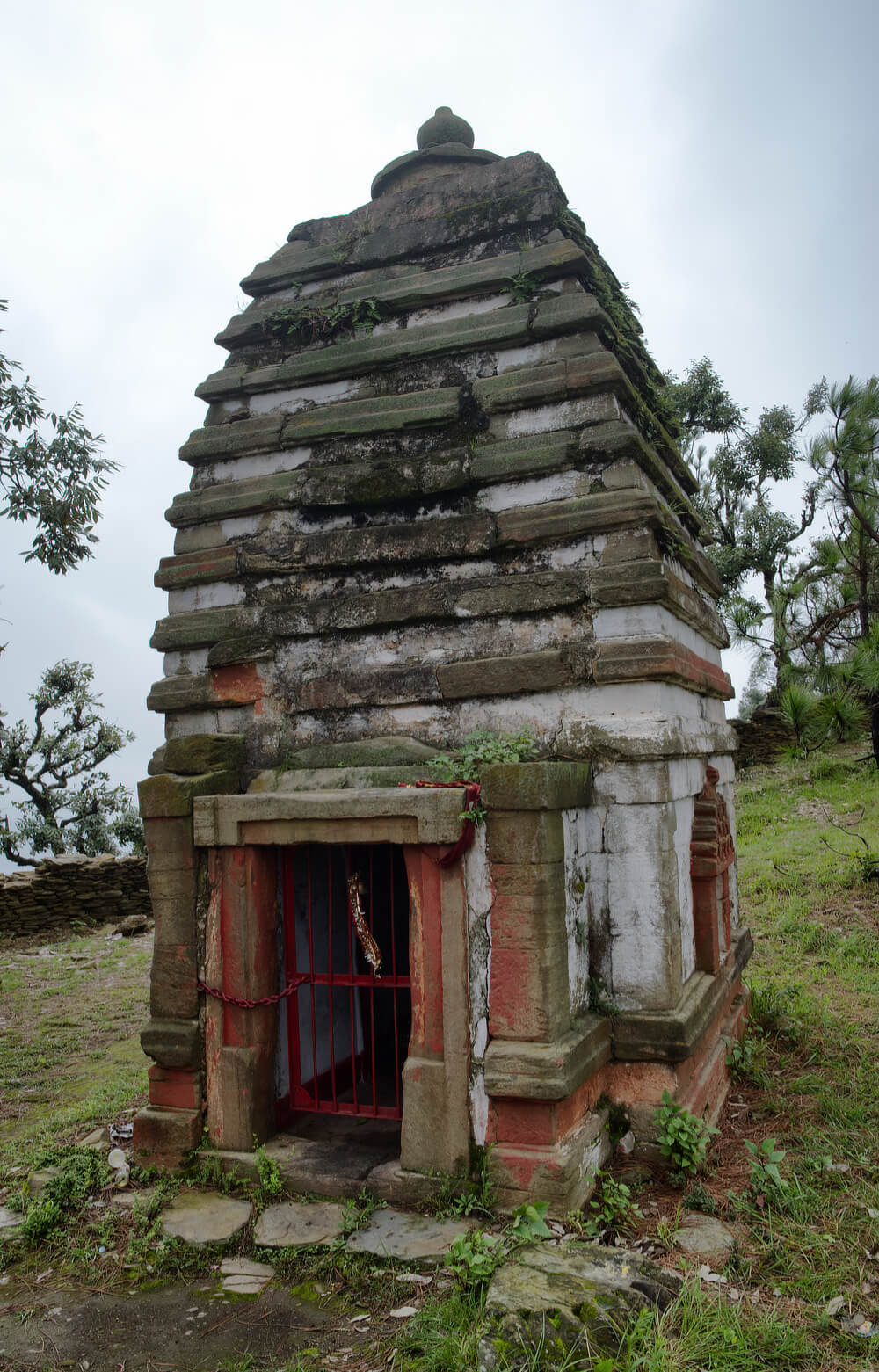
En route, you’ll encounter an ancient stone structure, an erstwhile shrine dedicated to Maa Kaali. Recently, the statue was relocated to a new temple within the Vindhyavasini temple complex, further along the path.
The Vindhyavasini temple complex sits majestically atop the hill, offering magnificent vistas. On one side, a glimpse of Almora town emerges, while on the other, the valleys leading to our village of Natadol unfold. Every corner of the complex unveils a distinct perspective of the surrounding landscapes.
The temple was first constructed sometime around the 9th century. The place was renovated around a decade back. Inside the temple complex lies the octagonal temple of Vindhyavasini Devi. Within the sanctum, the original rock idol symbolizing the Devi stands alongside a newer statue. In the past, an ancient four-armed idol of Lord Vishnu reclining on Sheshnag graced this site, but it has since found a new home in a museum.
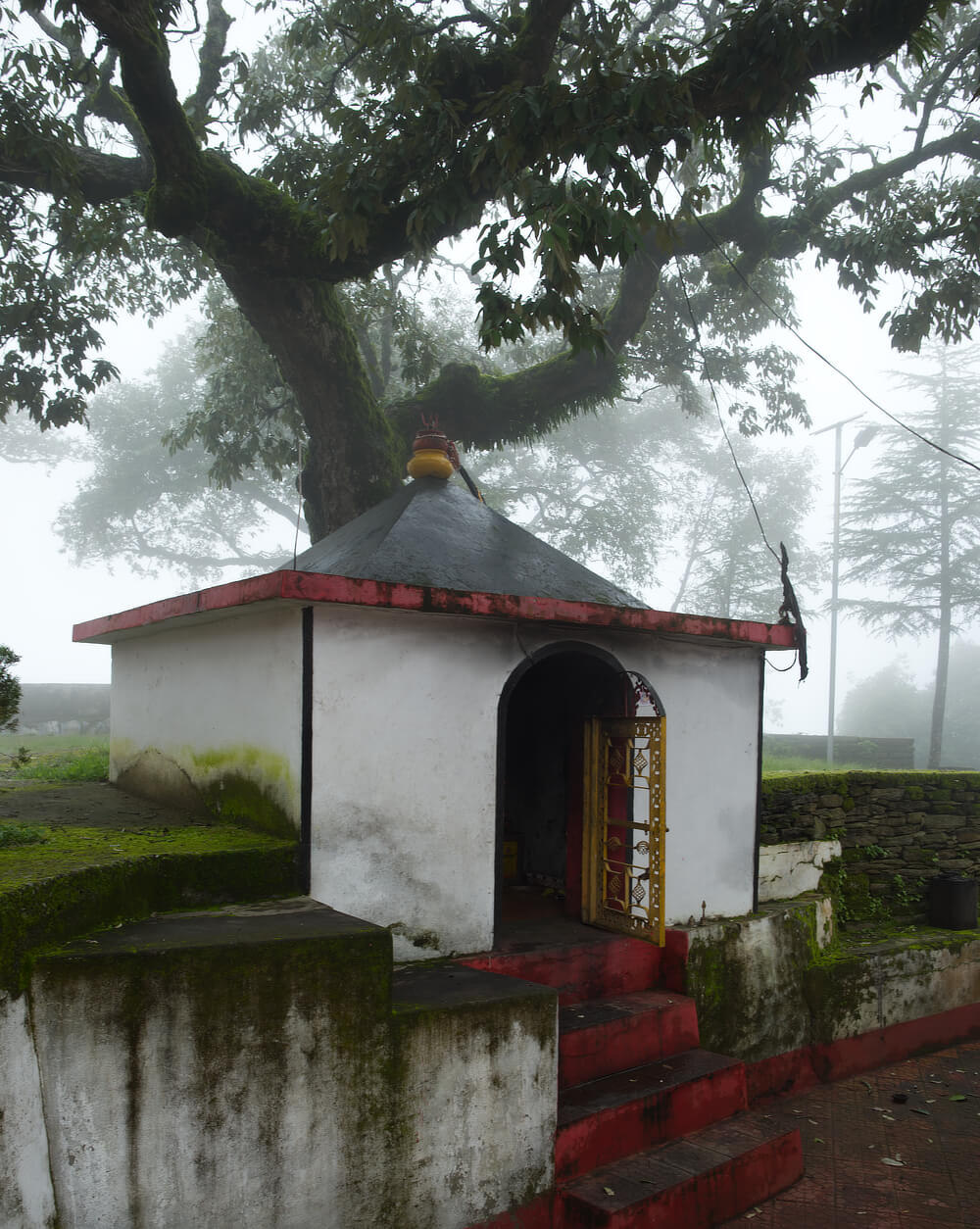
Beyond the main temple, you’ll discover shrines dedicated to Kali Mata, Lord Hanuman, and Bhairon Baba. Additionally, the complex provides designated areas for performing Yagya (Hawans), an integral part of Sanatana Dharma and Vaidik Culture.

Story of Vindhyavasini Devi and this Temple :
According to Hindu mythology, there was a powerful demon named Vindhyachal who terrorized the world and created havoc. To stop his tyranny, the gods pleaded with the goddess Durga to intervene. In response to their prayers, Goddess Durga assumed the form of Vindhyavasini and descended to the Vindhya mountain range in present-day Uttar Pradesh. She battled the demon Vindhyachal and eventually defeated him, restoring peace and harmony to the region. As a result, the goddess became known as Vindhyavasini Devi, the presiding deity of the Vindhya mountains. Goddess is believed to have manifested in various places within the mountain range. As a result, multiple temples have been established in these locations to commemorate her presence. This is one such temple.
In the temple here, the Godesses is believed to be present as swayambhu. In Hinduism, “Swayambhu” refers to self-manifested or self-arisen representations of deities, often in the form of natural objects or stones. While Swayambhu Shivlingas, which are naturally occurring or self-manifested representations of Lord Shiva, are relatively well-known and revered, the concept is not as commonly associated with Devi (the goddess) statues. However, there are instances where Devi statues are considered Swayambhu. These can include naturally formed rock formations, caves, or stones that bear a resemblance to a goddess figure and are believed to have a divine presence. Devotees may worship these Swayambhu Devi forms with great reverence. This temple is one such place.
Villagers also worship Vindhyawasini Devi as Banari Devi, representing the forests. How and when this started is not very well known.
The temple hosts a beautiful festival at the time of Holi. Do plan a visit to this place during Holi to get a feel of our local culture and festivities.
