
Located at about 23 KM from our cottage, and reached after a short trek is the ancient temple of Uteshwara Mahadev. Though smaller than the more famous temples, this site offers a charming and worthwhile destination for an outing.
The short trek to the temple passes through an old settlement where traditional Kumaoni houses can be seen, characterised by stone walls, slate roofs, intricately carved wooden doors and windows, and many other fascinating vernacular architectural details. On the sides of the pathway, lush greenery gives a refreshing feel.
Just before the main temple, there is a designated area for small gatherings and religious discourses. Beyond this, through a modest gate, lies the main ancient temple complex.
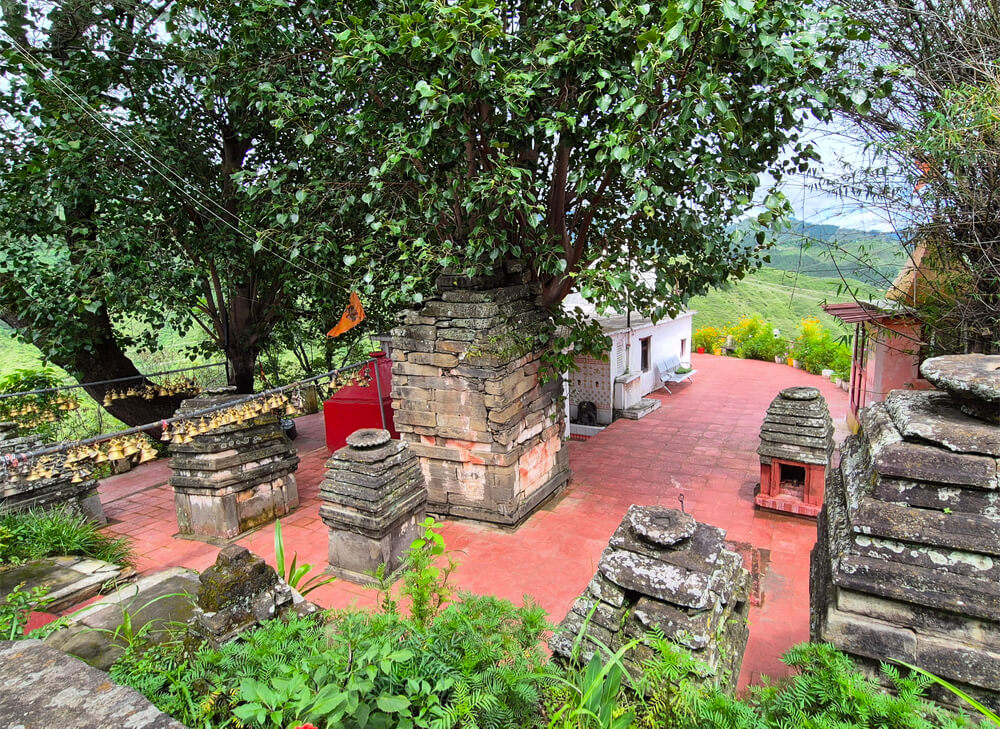
These small temples were originally built around 1000–1200 years ago and have been carefully renovated over the past few decades. The complex now houses ten small ancient temples dedicated to Lord Shiva, along with recently added temples for Lord Hanuman and Ram Darbar, and the main renovated Shiva temple.
Perched on the corner of a hill, the temple area offers stunning panoramic views of the surrounding valley.

In front of the newly renovated Uteshwara Mahadev temple, several ancient statues have been placed for visitors to admire. Among the most notable are those of Ganesha, Surya, Mahishasurmardini, and Uma-Shankar. These sculptures were salvaged from temples that were lost to the passage of time.

The main temple enshrines Lord Shiva in the form of his tongue, known as Jhiva. The sanctum features an ancient-style roof constructed from stone slabs carefully stacked one over the other without mortar, a technique typical of temples from that era in the region. Its modest size makes it easy to appreciate the craftsmanship up close.
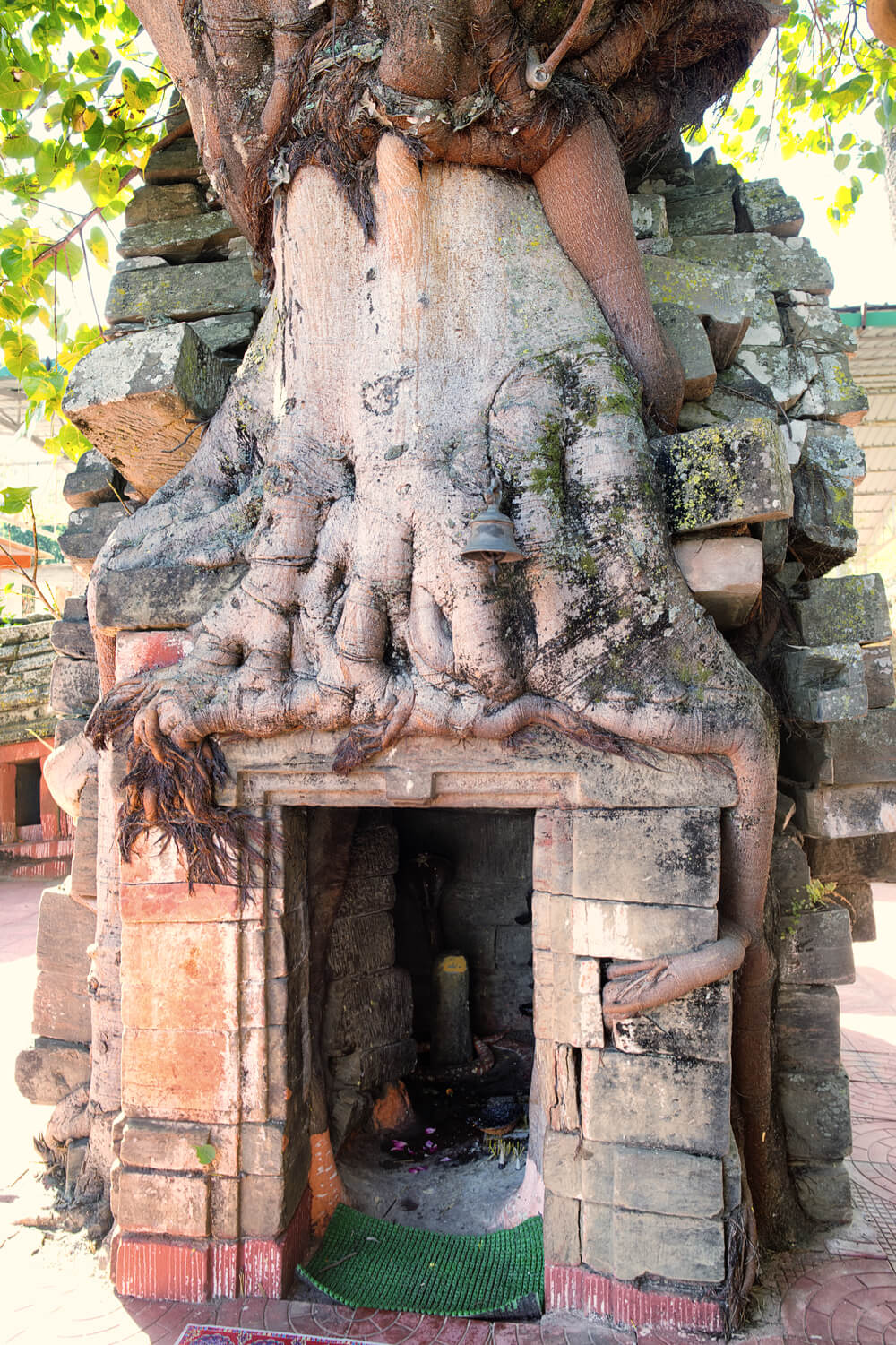
Directly opposite the main temple stands another beautiful Shiva temple, on top of which a tall peepal tree grows. The temple appears on the verge of collapse, as if it is being gently held together by the embracing roots of the ancient tree.
Story about Lord Shiva’s body parts and various temples dedicated to him –
There is a well-known story from the Mahabharata about the Pandava brothers. After winning a fierce battle against their cousins and relatives, they were left with the burden of guilt for killing their kin and teachers. To be freed from this sin, they sought the blessings of Lord Shiva. However, Lord Shiva was reluctant to meet them and hid by taking the form of a buffalo. His major body parts then appeared in different places on Earth, which are collectively known as the Pancha Kedar or Five Kedars. His face appeared at Rudranath, his forelimbs at Tunganath, his back at Kedarnath, his belly and navel at Madmaheshwar, and his locks of hair at Kalpeshwar. It is also believed that his hind limbs emerged at Pashupatinath in Nepal.
The locals believe that Shiva’s tongue (jhivā) manifested at this spot.
