Capturing Emotions – Sadness & Despair

On a recent photography assignment, I was capturing numerous smiling faces and street portraits. Later in the evening, while discussing my work with a friend, he suggested that since I was already photographing on the streets, I should also capture moments of sadness and despair. So, here are a few photographs that attempt to convey those emotions. I’ll also try to analyze each photograph to explain why it evokes such feelings.

Photograph of a sad man
Continue reading Capturing Emotions – Sadness & Despair

Common Composition Mistakes – Avoid These!

Today, as the rain pours outside, I’m lounging at home, reflecting on some of the recent photographs I’ve seen. A few common mistakes in composition come to mind. Are you making any of these errors? If so, they might be holding your images back from reaching their full potential. Discover these mistakes and learn how to avoid them in your future compositions.


Continue reading Common Composition Mistakes – Avoid These!

Minimalism in Photography

KISS… Keep It Simple, Stupid!
A girl-friend had once told this to me. Quite a famous line and I don’t even know where it originated initially. Little did I know that after so many years, this will become the opening line of this article.

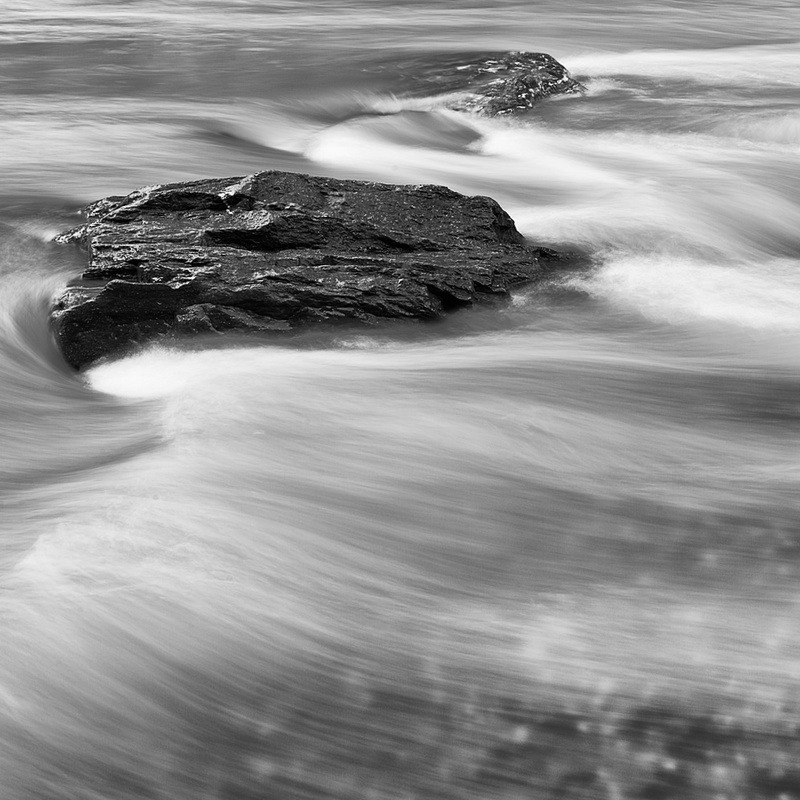
Keeping compositions simple is one of the most effective ways to make them powerful. A strong composition that is easy to understand and conveys its message clearly is the best gift you can offer your viewer. This embodies the essence of minimalism in photography.

Rock and Swirls
Continue reading Minimalism in Photography

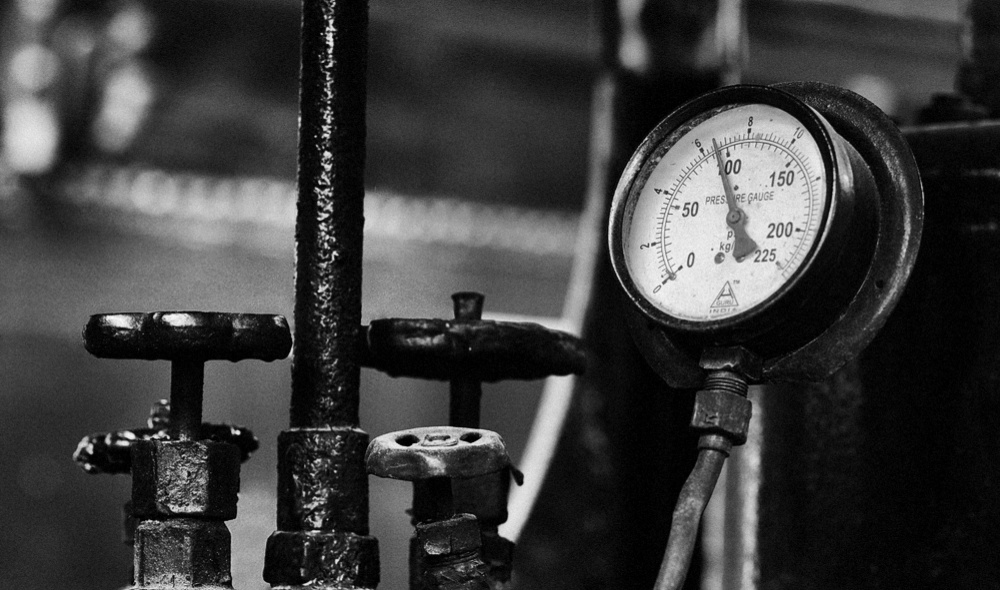
Balancing Elements – A Study of Locomotive Parts

Do you recall the sketches from your childhood? Recently, my parents shared with me some of the sketches that I had drawn as a kid. The most common sketch was a landscape done with crayons. It seems I was quite fond of it. There was a row of mountains, a river flowing down from the mountains dividing the foreground into two parts. One of these had a simple house and the other part had a tree growing. Behind the hills, on one side was the sun and on the other side were birds flying. I am sure many of you created similar sketches. Now even my daughter creates similar sketches.


Following up on those days, this is how I have started to balance out my compositions. Now I am learning to let the creative side of my mind, loose. The results seem more pleasing to me now.

Pressure Meter

Continue reading Balancing Elements – A Study of Locomotive Parts

Farmer’s Despair – Improving Composition

On one morning, I ventured out with a couple of my friends. Aim was to photograph some of the rural India. It was a photowalk combined with some quality time with friends. Little did I know that this would let me understand the pains of farmers and help me in my photography-journey.

Continue reading Farmer’s Despair – Improving Composition

Story in a Photograph

Every photograph has a story behind it. It means something to the photographer. There would have been incidents, anecdotes or thoughts that led to that image. The gap arises when the photographs fail to convey these stories. This is the medium we have to convey our thought and experiences. So, is it not obvious, that our photographs should also tell these stories?


Post Eye-Surgery

Continue reading Story in a Photograph

Myths in Photography? You decide!

“The great enemy of the truth is very often not the lie, deliberate, contrived and dishonest, but the myth, persistent, persuasive and unrealistic.” – John F. Kennedy.
I have come across various schools of thoughts on different topics that some of them are now like widely propagated myths. Are these really myths or just my mind fighting against itself? Has the whole photography fraternity got it wrong and just a handful of photographers can understand the truth or is it me who is confused? Here is a list of top facts that I consider to be myths.

(Nikon Df with Nikkor 50mm, f/5.6, 1/100 sec, ISO 100, +2 EV compensation on center-weighted metering)

Continue reading Myths in Photography? You decide!

Fibonacci Spiral and Photography

Leonardo Bonacci (Fibonacci) was an Italian mathematician, sometime in the middle ages. He is best known for his sequence of numbers called Fibonacci Sequence. This is a series of numbers where each consecutive number is a sum of the prior two numbers (1,1,2,3,5,8,13,21,34,55….. and so on). Though these numbers had been known to Indian mathematicians many centuries earlier, they were introduced to Europe by Fibonacci and caught the media attention some years back with the publication of Dan Brown’s novel, The Da Vinci Code. Painters have long used this sequence knowingly or unknowingly to create beautiful artworks and now photographers over the past few decades are understanding to use it.

Continue reading Fibonacci Spiral and Photography

Composition Rules – Part II

This article is in continuation with Composition Rules – Part I and covers some more rules of compositions.

Human Element

Humans in general love company. It is once again the evolutionary aspect in play. Since ages, people have lived in groups, hunted in groups and even fought wars in groups. Our subconscious finds comfort when other humans are around. It is therefore natural that presence of humans adds an interesting element to most photographs. Though not all genres of photography blend well with human element. Sometimes they can also be a distraction. Very careful use of human element can add drama to otherwise mundane photographs.

Tea Plantations

(Tea plantation with workers picking tea leaves at a distance)

Continue reading Composition Rules – Part II

Composition Rules – Part I

Composition Rules or Clichés, as I like to call them, have been used by artists since long and for the last many decades, photographers have also started using them to their advantage, calling them the ‘rules of composition’. These play on the creative side of our brain and guide our subconscious mind across a photograph. Some of these are highly debated ones. Proceed at your own risk. Risk of loosing your own way of looking at things!

Leading Lines

Some objects that have a a difference in color, contrast or texture, tend to associate with one another. When seen from far or from periphery of our vision, they form structures or lines. Sometimes there may be shapes in an image that are actually lines. These lines tend to lead a viewer’s eyes from one point to another. Culture and education also modifies this to an extent. Leading lines is one of the commonly used clichés that almost always works.

Boat

Continue reading Composition Rules – Part I