
At one end of our orchard, where the sun generously shines even during winter, we’ve implemented a time-tested sustainable gardening technique: Hügelkultur. By creating raised planter beds based on this method, we’ve transformed the space into a thriving hub for vegetables and companion plants, blending harmoniously with fruit trees nearby. These planter beds are a step toward enhancing soil health, conserving water, and creating a resilient ecosystem.
Hügelkultur, or “hill culture,” is a method that involves layering organic materials like wood, branches, leaves, and soil to build raised beds. Over time, the buried wood decomposes, enriching the soil with nutrients and improving its ability to retain moisture. For us, this method offered a sustainable way to repurpose fallen branches, pruning waste, and organic matter from our orchard while creating fertile beds for vegetables like bell peppers, tomatoes, green peas, and beans.
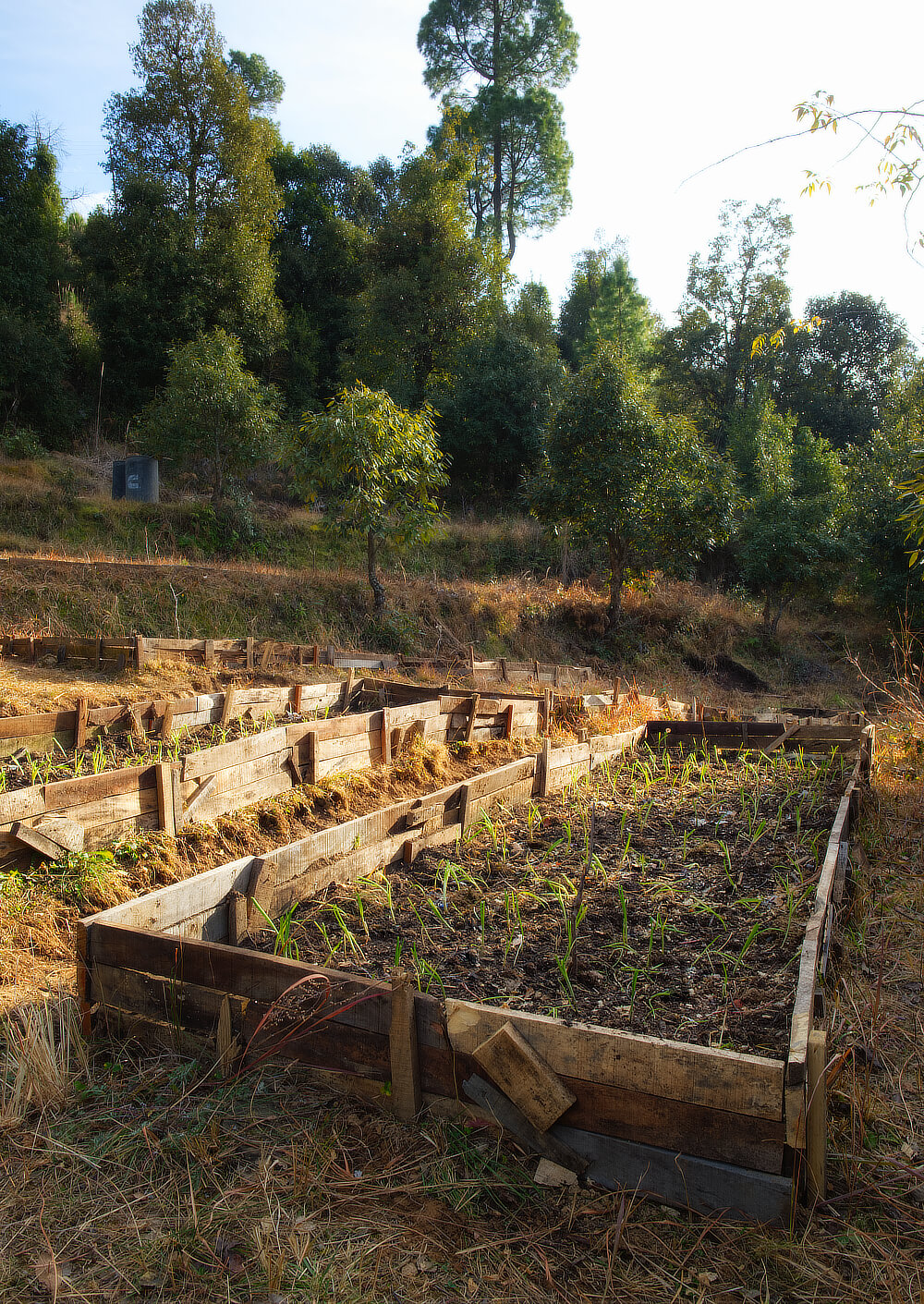
Every year, after collecting the harvest, we add more of garden waste. Sometimes we also use vegetable peels but we keep their percentage quite small. Mostly they are filled with twigs, dried leaves, and trimmings from brush cutter.
Our Hügelkultur Setup
Raised Planter Beds for Vegetables
At the sunny end of the orchard, we’ve constructed raised planter beds using reclaimed and waste wood, filled with layers of decomposing wood shavings, twigs, leaves, compost, old newspapers, and soil. The raised structure of the beds also ensures excellent drainage, making them ideal for areas with occasional heavy rains. The fact that the soil is not disturbed while planting new vegetables is important. The undisturbed soil is rich in fungal networks and other beneficial organisms, and in turn the vegetables grown in these beds are delicious and high in nutritive value. We also used beneficial fungal initially in these planter beds to set up a healthy mycelium and a fungal network.
Integrating Fruit Trees
Alongside the planter beds, we’ve planted new fruit trees to complement the orchard’s ecosystem. Additionally, some Hügelkultur beds have been built around existing fruit trees and shrubs, enriching the soil around their roots and providing additional moisture and nutrients.
Sunshine and Winter Resilience
The chosen location receives ample sunlight, even during winter, ensuring a longer growing season and healthy plant growth. This sunny exposure makes the beds highly productive, even in cooler months. The region is also surrounded by tall oak trees that act as windbreaks.
Biodiversity and Companion Planting
To further enhance the beds, we’ve planted herbs and flowering plants like marigolds, basil, and borage alongside the vegetables. These companions attract pollinators, repel pests, and improve overall biodiversity, creating a self-sustaining, balanced environment.
Benefits We’re Observing
Improved Soil Health: The decomposing wood and organic layers in the Hügelkultur beds provide a steady supply of nutrients to both vegetables and fruit trees.
Water Conservation: The beds retain moisture exceptionally well, reducing the need for frequent watering, even during dry spells.
Maximized Space: By integrating Hügelkultur beds with fruit trees, we’re making efficient use of space while enhancing the productivity of both crops and trees.
Extended Growing Season: The sunny location and heat generated by the decomposition process in the beds contribute to a longer growing season, especially for temperature-sensitive vegetables like tomatoes and peppers.
Reduced Waste: Pruned branches, fallen leaves, and other organic debris from the orchard are repurposed into the beds, reducing waste and creating a circular nutrient cycle. The composting process takes time, requires a bit of effort, and mostly focuses on kitchen waste. Here, we mostly focus on our orchard waste itself.
Hügelkultur: A Step Toward Regeneration
By adopting Hügelkultur in our orchard, we’ve not only enhanced productivity but also deepened our commitment to regenerative farming. These raised beds, surrounded by fruit trees, embody a holistic approach where vegetables, trees, and the soil work together in harmony. The planter beds at the orchard’s sunny end have become a vibrant example of how age-old practices can blend seamlessly with modern agricultural needs, offering lessons in sustainability and resilience.
Whether you’re managing a home garden, a fruit orchard, or a farm, Hügelkultur offers a simple, eco-friendly way to enrich the land and nourish the plants you grow. Come visit us and see this innovative method in action!
Learn More – Our Farming Methods
