
Eye-sight of individuals varies a lot. Some use spectacles and others don’t. Even those who do not use spectacles, end up with reading glasses after around 40 years of age. Camera manufacturers understand this and therefore they provide ways to incorporate minor adjustments to the camera, in sync with the requirements of the varying eye-sight.
Tricks to using long teles
With advances in optics and mass adoption of photography in the digital era, high focal length lenses or telephoto lenses have become very affordable. Every enthusiast and many accomplished photographers now venture out into genres like wildlife and birds, and enjoy these long lenses.
Extremes of Weather
Cameras are an expensive purchase for most. It is therefore natural for us to worry about the effects of weather. Let me put your mind at rest. The cameras are built to withstand a huge range of weather conditions.

Questions that nobody answers
Yesterday, over a cup of hot coffee, a reporter took a short interview of mine. Her questions were meant for her own audience but she was kind enough to hand me the transcription of the interview. (I have edited the manuscript to adapt it for this site) Here are some of those questions and answers.
Decrypting Warranty
How useful is a warranty that comes with the camera? Does the warranty on the camera and lens vary? How about extended warranty, does it make sense to buy it? Read on to answer these questions and many more …

What to do with old cameras?
With the advances in digital photography, cameras become old very quickly. Sometimes cameras become outdated even before a user sometimes gets to know them well. Quite frequently new cameras are bought and the old ones just lie unused. Here are some ideas for those old cameras which are not being used now.
Buying a used DSLR
Now that the digital photography era has already taken a strong foothold, more and more used DSLRs are becoming available at throw away prices. Sometimes these can prove to be a golden opportunity to own a good camera at an economical price. However these are also prone to problems, so here is a small guide to help you purchase a used DSLR.
Buying your first DSLR
Buying your first DSLR can be the most satisfying purchase, even if you are just a teeny-weeny bit inclined towards photography. Like any other purchase, the camera purchase can be a daunting task, considering the number of choices available and the price range they come in. I always advice my friends to follow few guidelines before buying their first camera.

Expensive Lenses & Better Photographs?
Do expensive lenses create better photographs? If yes, then why is the photographer considered the most important factor in a great photograph and not the lens? If they don’t, then why are these lenses so expensive? This tricky question was recently asked to me by a budding photographer.
Using Wide-Angle Lenses
Wide-angle lenses are those lenses who focal length is smaller than the normal lenses for a particular film/sensor size. Commonly used by landscape photographers, wide-angle lenses are now very common and all the cameras that come with kit-lenses now have focal lengths extending well into wide-angle territory. These lenses have their own strengths and when used properly, these can add the missing dimension in photographs.

(Opera House – Odessa, Ukraine. Nikon D200 with Nikkor 18-35 mm lens)
Shutter – How it works
Shutter is what keeps the film or sensor hidden, and when the shutter opens, the light falls on them, creating the photograph. The time duration for which the shutter opens, to let the light in, is called the shutter speed. Shutter speed is one of the basic camera settings. Here is a short guide to understand the workings of a camera shutter and its various limitations.
Evolution of Nikkors (Nomenclature)
When the auto-focus was starting to make its mark, Nikon took a firm stand and did not alter its mount unlike some of its competitors. This has been a big help for Nikon users till date but is also a big cause of confusion. All of the different lens types which are available now and abbreviations being used might be overwhelming for a user. First and foremost, most of the Nikon lenses are called Nikkors. There are also some lenses which are called Nikon itself. The names are frequently interchanged by users. No confusion there. Both Nikkors and Nikon lenses are made by Nikon (except for few occasional outsourced versions like the 35-70 kit lens of Nikon FM10). Some diehard Nikon fans wince at the mix-up of the names but the fact remains.
Nikon or Canon?
Which camera to buy – Nikon or Canon? These are two good camera companies and at the time of their first purchase this is one of the commonest questions asked across forums. Before answering the question, let me first get into a bit of history.
Staying Focused
Nothing spoils a photograph more than a wrongly focused subject. The camera systems are now very advanced when it comes to focusing correctly. The AF sensors are super-sensitive and can work in dim light, low contrast and even through linear polarizers. Understanding how the focus systems work and their limitations can go a long way in getting good images.
Megapixels
Number of Megapixels is one of the biggest myth being pushed by salesmen, shopkeepers and even consumers of photography goods. Do they really matter? What is the ideal number of pixels a good camera should have? What are the advantages and disadvantages of having too many or too little of these?

Metering Modes
”Embrace light. Admire it. Love it. But above all, know light. Know it for all you are worth, and you will know the key to photography.” – George Eastman.
Getting an accurate measure of light was a tough task in the initial days of photography. Photographers tried various methods. When everything failed, the concept of ‘bracketing the shots for exposure’ was born. For getting that perfect exposure, it is important to understand how the light meters work.
Next lens to buy?
Another common question that many photographers ask is which lens to buy next. The fact that the camera has an option to change lenses makes people feel that more lenses are required. The internet generation calls this disease as ‘GAS’ or ‘Gear Acquisition Syndrome’. Everyone suffers from it one time or the other. However there are times when there is a genuine need to buy a new lens.
Camera modes (PSAM and more)
Camera mode dial is something which really gets on photographers’ nerves. Every photographer has camera modes which are never used. This relates to style of shooting but more so with the comfort level in using these various modes. One of the first things to becoming a good photographer is to become comfortable with the camera. I thought I’ll write a small description of these various camera modes for clarity’s sake. I started of with cameras having manual mode and I still find Aperture Priority and Shutter Priority a luxury which I often use. The description may therefore be a little biased from my point of view.
Normal Lens
The normal lens or the standard lens was the most common kit lens with almost any camera before quality zooms and crop sensor digital cameras came into the scene. So what exactly is a normal lens? Leica came up with this concept and termed the lens that makes everything look like how our eyes see as ‘normal’ and provided 50mm lens for this purpose. Normal lens is a lens that represents the relative distances between the objects in a same manner as we perceive. The perspective is almost similar. The angle of view covered is also almost equal to the area our eyes consciously see (The area of conscious vision is actually much less than the angle of view that our eyes are actually capable of seeing. For a comparison of our eyes and camera – Our Eyes vs Camera). Normal lenses are prime lenses in the region of 40 to 58 mm focal length with the 50mm being the most common, on a 35mm frame size or a ‘full size’ sensor. Some manufacturers also called them standard since these were the commonest lenses once upon a time and were quite frequently the standard kit lens provided with camera bodies.
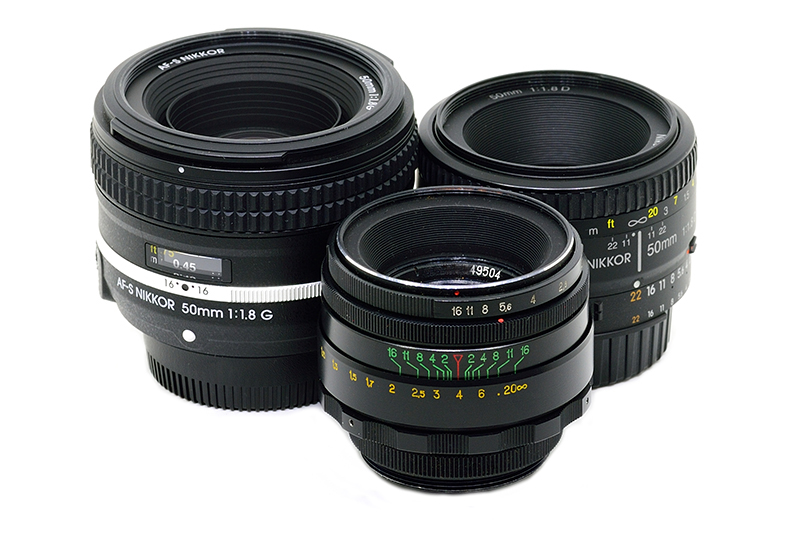
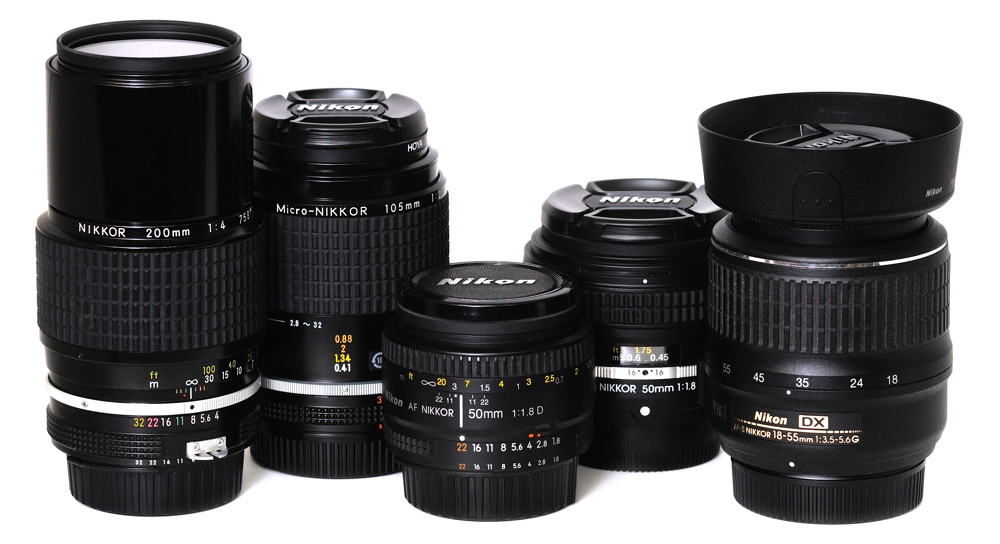
(Some normal lenses)
Cleaning DSLR and Lens
The worst fate that a photography equipment can have is to remain packed and kept on a shelf in someone’s home. I have seen some of the best photography equipment available, not being used by their owners. It pains me to see all that beautiful equipment not being used. Recently I gathered the courage to ask a friend of mine about his beautiful digital Leica kept in a glass shelf. The answer I got- “It is too dirty outside in the city to risk carrying it around. I use the camera on family holidays when we go to some nice clean countryside. I however did not take it on my last holiday since that was in a beach resort with lots of sand and wind.” A few other photographers also have similar thoughts. For most people, their photography equipment is an expensive purchase and they do not want it to get dirty.
Prime Lens or Zoom Lens?
One of the commonest questions that a lot of photography beginners ask – Which lens to buy next? In my opinion if a person is asking this, then the person is not yet ready to buy another lens. (More on this – Next lens to buy?) My first lens was a normal prime lens. Once I felt the need for a wider lens, after many years of use, I bought my second lens and so on. I have very few lenses in my collection and most of them were bought after facing limitations of the earlier lens for a long time. I do have a few lenses which were bought out of sheer desire rather than actual need but they are few in number.
Buying a used lens
Nikon gives me the advantage to use some really old glass. Most of the lens are compatible with even the newest of the DSLRs. User Manuals of all the cameras also list the lens that are compatible with a camera and which ones are not. Apart from old Nikkor glass, many used / old lenses from various other manufacturers are also available in the market. People keep upgrading and selling old lenses.
