
Tripod is one of the best accessories to have if you are interested in stabilizing your camera. Here are some tips to get the most out of your tripod.
Homestay with Fruit Orchard
Tripod is one of the best accessories to have if you are interested in stabilizing your camera. Here are some tips to get the most out of your tripod.
While photographing a mountain stream some days back, I realised the need for a dark ND filter. I was hoping to capture some motion blurs too. Unfortunately the darkest of the filters that I had were not dark enough for the purpose. Faced with a need to buy a dark ND filter, I started searching for one and in the process, came to know how overwhelming the choices are. Buying a simple filter can be a daunting task. There are a huge number of variables and various things to be considered. Filters have come a long way and now these are not just a simple piece of glass in a ring.
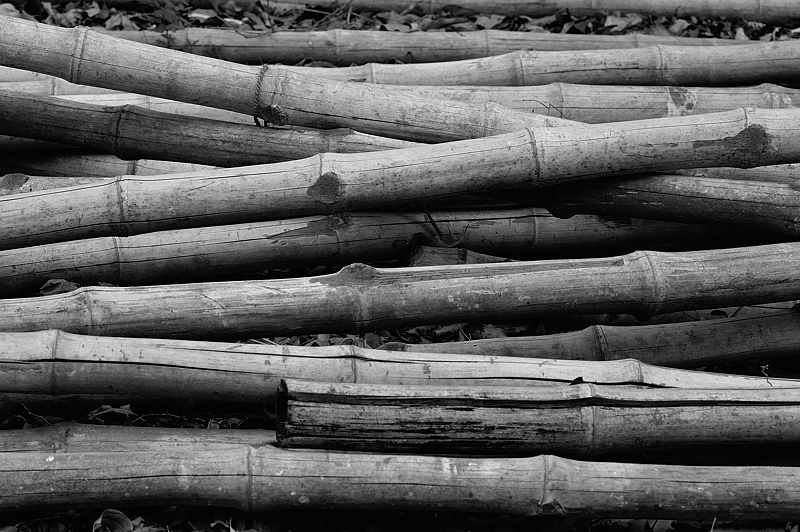
(Stack of Bamboo – Clicked with a Nikkor 105mm lens with polarizing filter mounted on it)
A friend of mine was searching for an article on how to keep his camera clean. Everything that google searched for him pointed to website that taught about how to clean the camera but nothing about keeping it clean. Based on his suggestion, here are some pointers to maintaining your photography equipment. If you are anywhere close enough to me when it comes to keeping your camera and lens clean, then this is a must read article for you. This is about prevention. Prevention is better than cure, or in this case cleaning.
Continue reading Keep your photography equipment clean!There was a time when monopods were not as common as tripods but lately I have been seeing them all around. What started off as a portable option to tripods has now become one of the most useful supports available for cameras. Monopods as the name says are the camera supports that usually have just one leg.
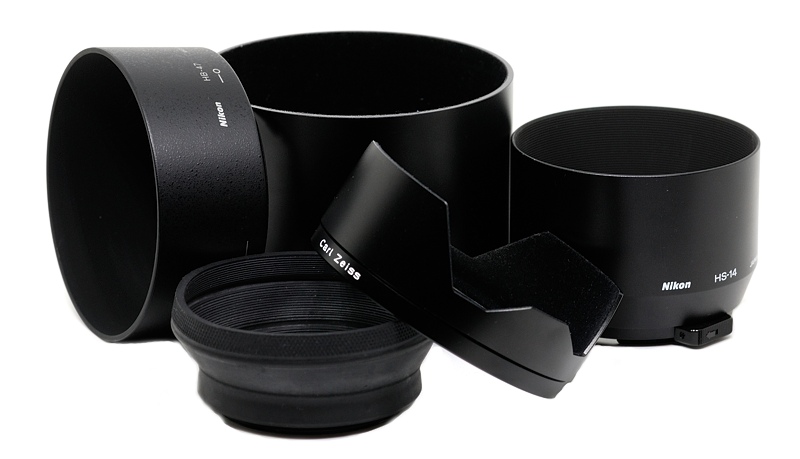
These small pieces of plastic or metal, how good are they? Do they provide any protection to the lens? Are these good for photographs? Lens hoods are an often debated topic. They do help but sometimes they are very uncomfortable to use. Most of the new lenses are sold with a compatible hood now a days.
A good sturdy tripod is probably the next best investment, after a good camera and lens. Regardless of what people might say, nothing works as well as a tripod when it is required. The lack of information and the choice of brands (including many unheard of names) becomes a nerve-wrecking experience. So much so, that after browsing the overwhelming choices available, many photographers just let it go and stick to whatever aids they had been using earlier.
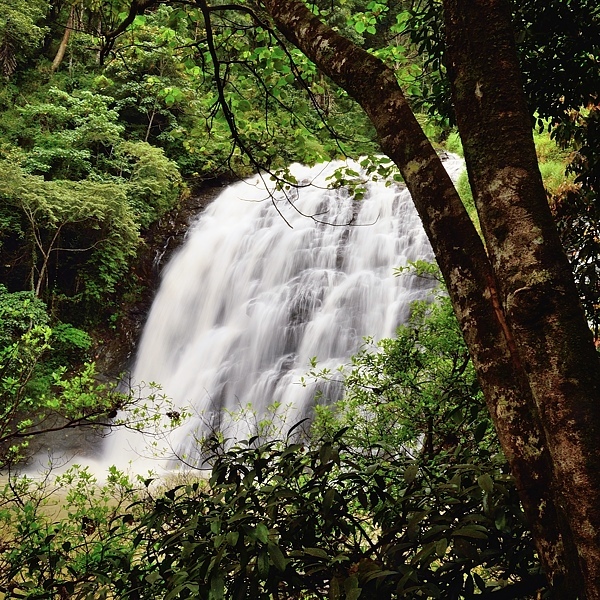
(Waterfalls – Nikon D200 with Nikkor 18-35mm, 1/8 sec)
There was a time when the film was not too sensitive to light and manufacturers were trying their best to boost up the sensitivity. These low sensitivity films required long exposure times and huge amount of light. No wonder that the old portraits had all serious looking people. Imagine being made to stand for many minutes in one pose and sometimes under bright uncomfortable lights! With the advancement of film sensitivity rose another requirement. There were times when the overall light entry had to be reduced without increasing the shutter speed or constricting the aperture too much. This is when the dark filters stepped in.
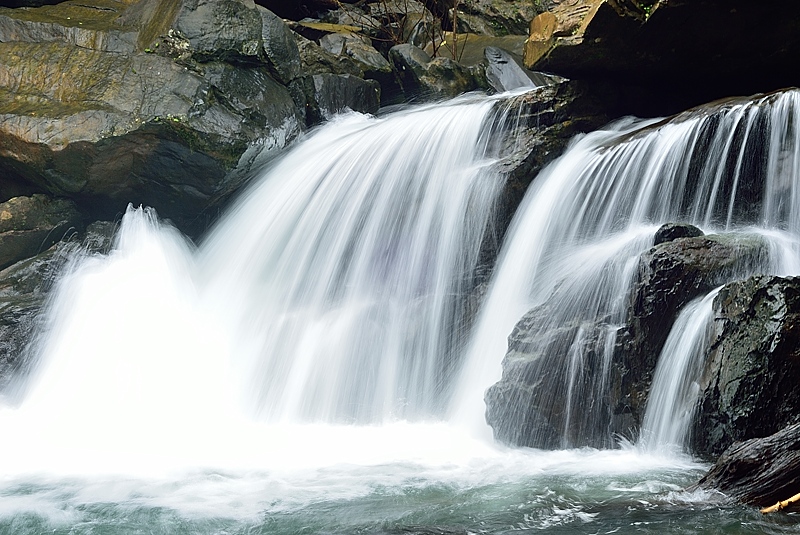
(Waterfalls – Nikon D200 with Nikkor 50mm, 1/4 sec with ND filter)
Batteries come in all shapes and sizes and work on different principles of chemistry. The common batteries used in cameras and speedlights are AA in size though the smaller version called AAA is also becoming quite popular. I will restrict my discussion on these batteries since this is where we are faced with choices. The odd shaped batteries that come in DSLRs and some other cameras are made as per camera specifications and we really don’t have much choice there. I do not recommend using cheap third party batteries after having invested a huge amount in your camera.
One of the first flashes that I owned was a Vivitar 283 flash. It was a manual flash with an ‘Auto-thyristor’. I could set the flash intensity manually or automatically based on aperture and subject distance. I learnt about guide-numbers, filter factors and a lot of interesting stuff while using it. I do miss the good old days.
Now I have speedlights that have complicated menus and functions which I set and forget. Some of them I don’t even use. My favorite speedlight now is Nikon SB600 for reasons of my own. I also have some camera bodies which have built in flash. (I use the words ‘flash’ or ‘speedlight’ to indicate the strobes found in the camera as well as sold separately). In this article I will try to give a basic explanation of various flash modes available on the camera (directly or through the menu) as well as some of the modes or features available on speedlights. I am leaving out the usage guidelines of manual modes since most manual flashes from yesteryear can cause harm to the present-day electronics.
Continue reading Flash ModesCamouflage or the art of blending into the surroundings is commonly used by soldiers. Photographers too have adopted this. Now I see camouflage costumes, covers for tripods and lenses, backpacks and camera-bags, tents, water-bottles, flash-lights and what not.
Why soldiers use camouflage? Our eyes see colors in the day-light and our subconscious ignores anything that does not stand out. Person covered in green and yellow camouflaged costume is therefore difficult to notice in a forest compared to another person dressed in red. The one in red will stand out (to some extent due to the effects of color theory too on our minds). The soldiers in their camo-dresses, can therefore remain hidden from other soldiers.
The other day I wrote about Black and White photography and the very next day, I got an email about the red filters. It seems that they are some of the least understood filters nowadays. Instagram users apply various filters, including red colored, at times to improve their selfies (a term which I fail to understand). Here in the article, I am talking about the true red glass that fits over the lens. They are also denoted by the Wratten numbers from 23A to 29.
What are these red filters and how are they used? First, let me clarify a few things. Instead of calling them red filters, they should ideally be called blue/green-inhibiting or blue/green-subtraction filter. That is exactly what they do.
Polarizing Filters or simply Polarizers were second most used filters in the film era, first being the UV filters. Polarizers work on the principle of letting only one plane of light waves to pass through. Remaining planes of light waves are blocked. Earlier polarizers had a single polarizing layer. Then came the autofocus cameras. There were times when the angle of polarized light being let into the lens would not coincide with the autofocus sensors and autofocus used to fail. Circular polarizers were introduced. These had another plate after the polarizing layer to rotate the light. This reduced the problems with the auto-focus systems. Due to their construction method, the circular polarizers show the polarizing effect only when seen from ‘thread side’. When seen from the ‘groove side’ polarizing effect is not seen, instead just a color shift is visible.
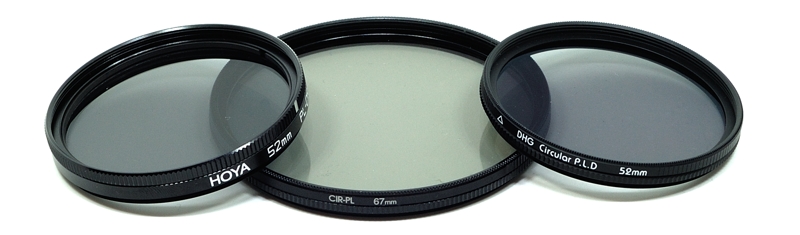
(Polarizers in different sizes and thicknesses)
Continue reading Polarizing FiltersTripods have been the most used photography accessory since the time photography came into this world. Old films of ISOs less than 100 demanded a very slow shutter speeds. Did you know that when the first (original) Kodachrome was launched, it had an ISO equivalent of 6 ? By early 1960s were they able to cross ISO of 25 ! Tripods were a must for good natural light exposure then.
Now we have super sensitive sensors with excellent noise reduction, lenses that in more and more light and mechanisms to take away some level of camera shake while shooting hand-held. Are tripods needed now a days? Do I use tripods?

(Nikon D200, Sigma 150-500 at 450mm, f/9, 1/160, ISO 200, handheld with image stabilization switched on. It was tough holding the heavy lens mounted on the camera but it gave me freedom to track the deers as they walked around.)
I usually carry a small shoulder bag or a messenger style bag for carrying my photography stuff. The bag usually has a camera with a lens mounted on it and sometimes a spare lens. Too many lenses tend to distract me. So I limit myself to just two prime lenses.
I spent a good amount of my time living in coastal cities with my photography equipment. Coastal cities have high humidity and this leads to a common problem in optics – lens fungus.
In the earlier days of photography, people were not much bothered about the fungus. People owned and used a single lens most of the time which helped by exposing the optical elements to sun-light every once in a while. This prevented fungus. Even if the fungus grew, people did not notice it till it started causing excessive softening of the pictures.
One of the heated debates in photography is about the use of clear filters (UV/Haze/Clear) for protection.
The photographers discouraging use of the filters give arguments about the ineffectiveness in providing real protection to lens in case of fall, adding a piece of glass in front of an expensive lens bringing down the quality of the whole setup, increased flares and halos. Hoods provide better protection. There are incidents where the lens with a filter fell down and the filter failed to provide any protection and in a few instances ended up scratching the front element.
Film era has ended and so have the lead lined cases for transporting films. The memory cards are the in thing now and they come with their own set of problems.
First of all, put your mind at ease. The memory cards are really really sturdy. Photographers tend to either loose them or upgrade to higher capacity cards. Very few of us have actually witnessed card failures.
