
Living in the hills near the forest brings both benefits and challenges. We often find ourselves visited by wild animals; hares delighting in our vegetable garden and wild boars occasionally unearthing potatoes are frequent sights. However, early morning forest walks offer a distinct advantage, allowing us to spot tiny critters and small animals along the way.
Nowadays, with winter behind us, early morning forest walks are wonderfully comfortable and enjoyable. Birds rise early, filling the air with their lively calls. At dawn, the Blue-Whistling Thrush residing just outside my window begins its melodious serenade, accompanied by other birds hopping and fluttering on the roof, creating a charming cacophony. It’s a mixed feeling; sometimes, I imagine these rooftop birds are providing a rhythmic percussion to the song.
This morning, I woke up early and set off for a walk towards the forest, camera in hand to capture some avian moments. Birds of all kinds chirped around me, perched atop trees eagerly awaiting the sun’s first rays. From bulbuls, sparrows, and tits to colorful tiny birds and larger magpies and jays, the variety was captivating.
I took a longer route, following an ancient stone pathway that once served villagers and now runs along the edge of my orchard. Some magpies ventured quite close to me, a rare sight. Despite my 150-500 mm telephoto lens zoomed to 500mm, I had to reduce the focal length (or popularly called zoom-out) to capture their close-up. It was remarkable to see them unafraid, allowing such proximity rarely granted to observers.
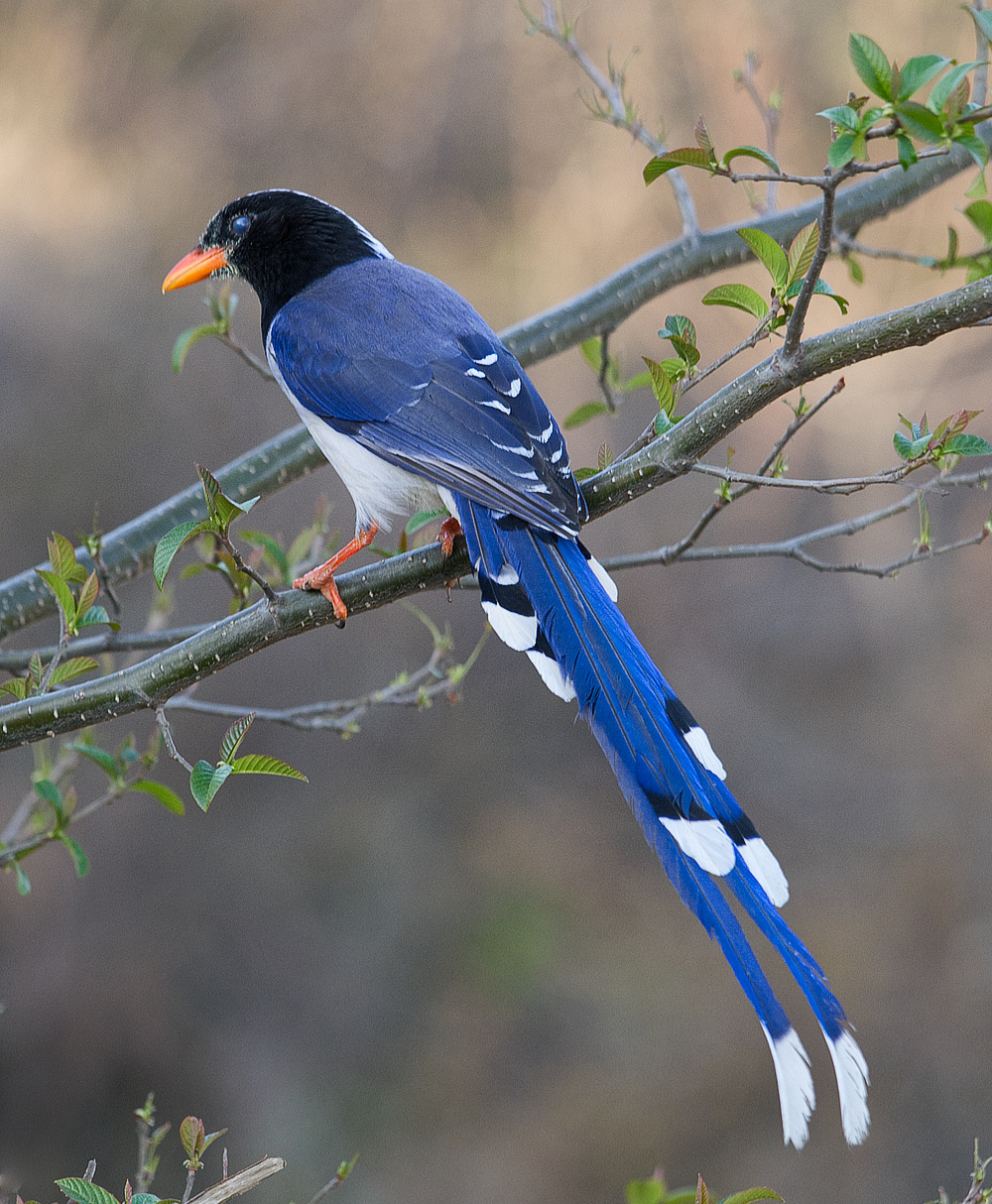
( Orange Billed Blue Magpie – Sitting about 2 meters from where I was walking. It didn’t fly away. There were a few others too nearby. )
A short distance away, small birds perched on a bush chirped loudly, displaying excitement without fear, unlike when encountering a snake or leopard. If only I could understand their chatter.
The stone pathway winds amidst trees on both sides, turning every few meters.
I’ve been working on rewilding our garden, allowing dense bushes and foliage to flourish around our orchard. It’s become a haven for small animals and birds, with gaps in our fence allowing them easy access. A bit of damage to our vegetable garden is a fair trade-off, especially when the joy of spotting a wild hare brings more delight to the kids than opening a Christmas present. Rewilding brings back a natural balance; bees and butterflies flutter around, and wildflowers bloom profusely.
It was no surprise to find so many birds congregating near the stone path outside my home.
I snapped a few more photos of the small birds and moved on. Just as I turned, I discovered the reason for their commotion: a small fox lay injured by the pathway. It didn’t attempt to flee when it saw me, perhaps recognizing me as a familiar presence from our garden. On closer inspection, I noticed it was bleeding from a leg, possibly injured by another predator or an accident.
Setting aside my camera, I approached cautiously. The fox didn’t resist as I gently lifted it—it almost felt like handling a puppy, emitting a soft whimper that hinted at discomfort.
As the sun began to rise, I carried the fox home and placed it carefully on a doormat outside. I keep a well-stocked emergency medicine kit, essential in our rural setting. With some povidone-iodine solution, I cleaned the wound and checked its leg, finding the movement somewhat restricted but not severely compromised. After cleaning the cut, I provided a safe resting place for the fox, offering biscuits and water.
Hurrying back to retrieve my photography equipment, I felt a pang of concern, despite the safety of the hills. After a few minutes, I reached the spot. The camera was there, the bag was also hanging there. A village boy curiously asked me if I was trying to photograph something using a remote or a timer by placing the camera there. I answered in affirmative. This gave an indirect indication that my photography equipment was in my sight all the time. Maybe, this was a kind of an insurance for the future. Maybe this response was due to the lack of trust I have developed over the years with mankind.
Returning to where I found the fox, I spotted a broken glass bottle of local liquor stained with dried blood—a likely cause of its injury, picked up while traversing our orchard.
Back at the house, the fox rested outside, having sipped the water but ignoring the biscuits. After tending to the fox and mindful of potential health risks, I changed clothes and took a bath before attending to other tasks.
Hours later, stepping outside, I found the fox gone. Its absence signaled recovery; they do heal remarkably quickly. Though I forgot to capture photographs, their presence would have beautifully complemented this recounting.
Epilogue
I cracked open a cold beer and stepped outside into the warmth of the day. The sun beat down, making the chilled beer especially refreshing.
The birds were still around, with green-backed tits and russet sparrows hopping about, appearing relaxed. Perhaps they were relieved and content knowing the fox had been helped. Then again, it might have been my imagination; they could have simply been weary under the bright sun.
With beer in hand, I strolled over to where we’ve planted grapevines. Among the flutter of black-headed jay wings, I spotted the fox basking contentedly in the distance. It seemed natural for it to rest and recover after being assisted, even if it had later preyed on the jay. The injury caused by the glass was human-made, prompting my intervention. The fox needed to eat, fulfilling its role in the food chain.
Reflecting philosophically, I pondered on the balance of nature. While human interference like discarding glass bottles disrupts this balance, I felt compelled to intervene to rectify harm done. Yet, the cycle of life, including predation and its aftermath, is intrinsic to nature. The sight of feathers stirred a twinge of sadness, but it was a reminder of their natural way of life.
Another way to look at it – Ultimately, my efforts in rewilding the garden around my place also aims to restore this delicate equilibrium.
This article, originally published on my photography site, is now archived here; while some details may have lost their original context over time, it still offers an intriguing read.
Complete list of archived content – Photography Articles
Discover more from Maini's Hill Cottages
Subscribe to get the latest posts sent to your email.
