
In the midst of this frigid winter, I cozied up in layers of warmth this morning and delved into my collection of 1990s National Geographic magazines. The photographs within are profoundly evocative, each telling its own story. It makes me wonder, where have such talented photographers gone?
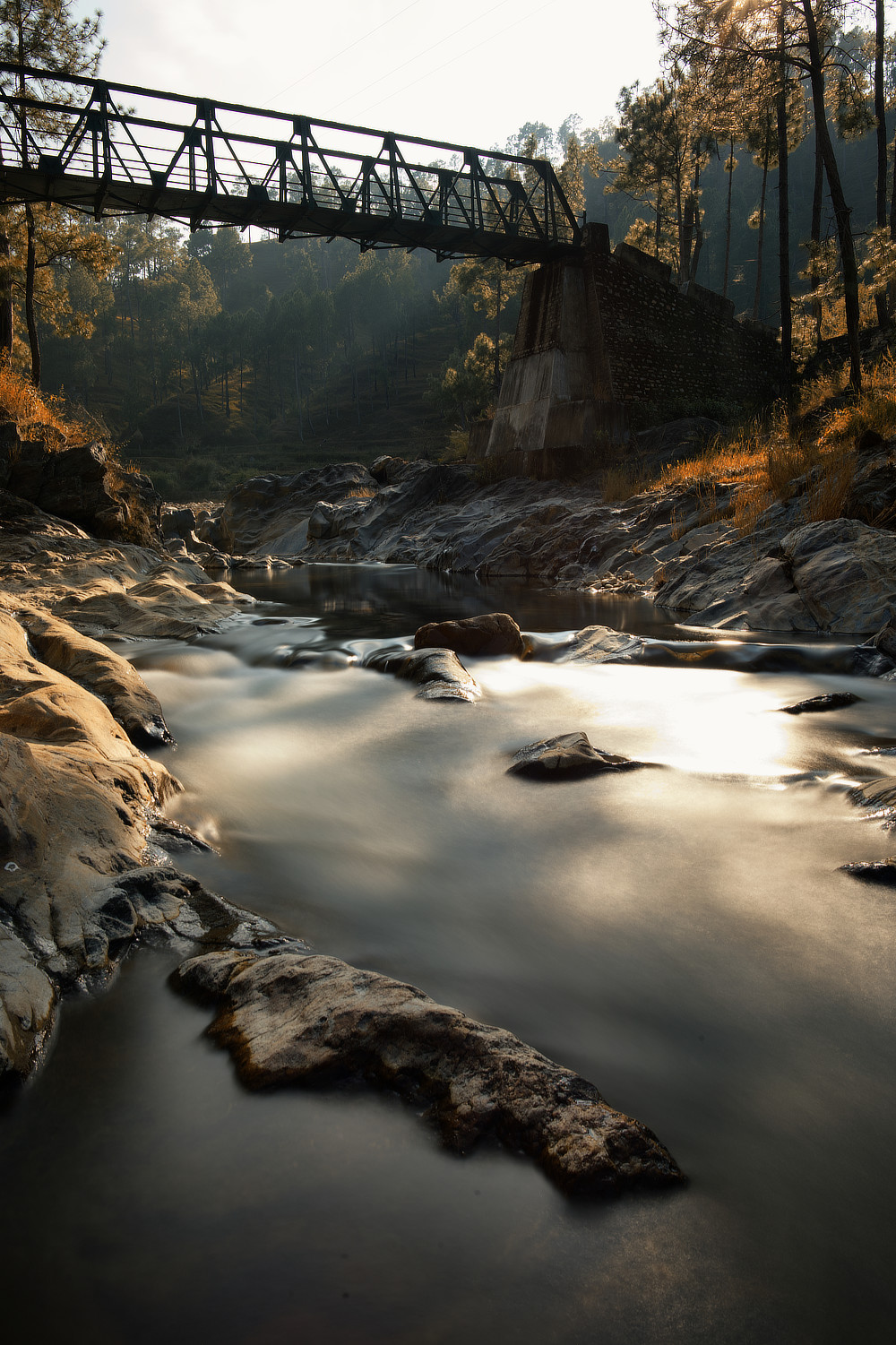
(Bridge over a mountain stream – About a half minute exposure at f/16, ISO 50, with an ND filter on.)
I’ve touched on this topic before, and here I am again. In recent years, social media and photo-sharing apps have significantly altered photography. Images are often oversaturated, over-sharpened, and unrealistically compressed, dominating the visual landscape. Many photographers seem swayed by social validation, potentially losing their unique artistic vision. Am I mistaken in this observation?
Popular Photographer or a Great Photographer?
One of the pervasive issues with social media is its omnipresence; it’s everywhere, and people are deeply entrenched in it. From checking likes, shares, and comments at the start of each day to constantly feeding the feed with more content at day’s end, it’s become an addiction.
What’s troubling is the growing tendency to equate popularity with photographic excellence. With the widespread use of social media, popularity has become mistakenly synonymous with greatness. However, popularity often reflects strong networking abilities and perhaps charisma rather than true photographic skill.
I often argue that someone with a hundred thousand Instagram followers will inevitably receive more likes (or hearts) than someone with only a few hundred followers, even if the latter posts images comparable to those of Ansel Adams and other masters of photography.
A truly exceptional photographer may not be widely popular at all. Moreover, it’s crucial to distinguish between popularity and true fame. A person with many followers or friends is popular but may not be known by anyone outside that circle. A famous person is well known by most in the field and even outside of it.
The Impact
This shift has altered the criteria for evaluating photography. Many now associate good photography with overly processed images that saturate our feeds.
Yesterday, I came across a stunning photograph of a Verditer Flycatcher captured by a photographer friend of mine. The composition was impeccable, showcasing the bird’s beautiful sky-blue plumage. However, when he shared the post-processed version today—now deep blue and resembling an Ultramarine Flycatcher or a lighter Blue-Whistling Thrush—I hesitated to express how the vibrant edits had altered the originally lovely image. Perhaps he’ll reconsider after reading this and adjust the processing for a more realistic depiction.
So, do you see, what has happened? We are now facing a catastrophe on a humongous scale where hundreds or thousands of photographs or even more are going to be ‘over-cooked’ and desecrated.
… and the Stalwarts also Collapse
Regrettably, this trend extends beyond social media. Even esteemed photography magazines, once revered for their high-quality standards, have fallen prey to this phenomenon.
Take a look for yourself. Compare the photographs from decades-old editions of National Geographic, Geo, and Geographical with their contemporary counterparts. The visually pleasing aesthetics of yesteryears have given way to today’s exaggerated standards. What was once considered maximum saturation, akin to films like Fuji Velvia, is now merely the baseline. Images are excessively sharpened, often causing visual discomfort (though perhaps this is a subjective view, but then it’s my space to share my thoughts).
The Afghan Girl by Steve McCurry? That is just one of the incredible photographs that these magazines used to feature. Gone are those days.
Yes, there are still a few exceptions, but such magazines are becoming increasingly rare. For those interested, I recommend magazines like B&W, Aperture, and Professional Photographer. Alternatively, explore any edition of National Geographic from the pre-digital photography era for a glimpse into photography’s rich, unaltered past.
Stop! Don’t waste time on this site!
If you are one of those who love the color of brilliant green chemical over the greens of foliage, if you are one of those who prefer the reds that stack up on one side of histogram rather than the subtle gradations in the reds of sunsets, this article is not for you. And, I am the kind of photographer who may seem to be on an entirely wrong path to you.
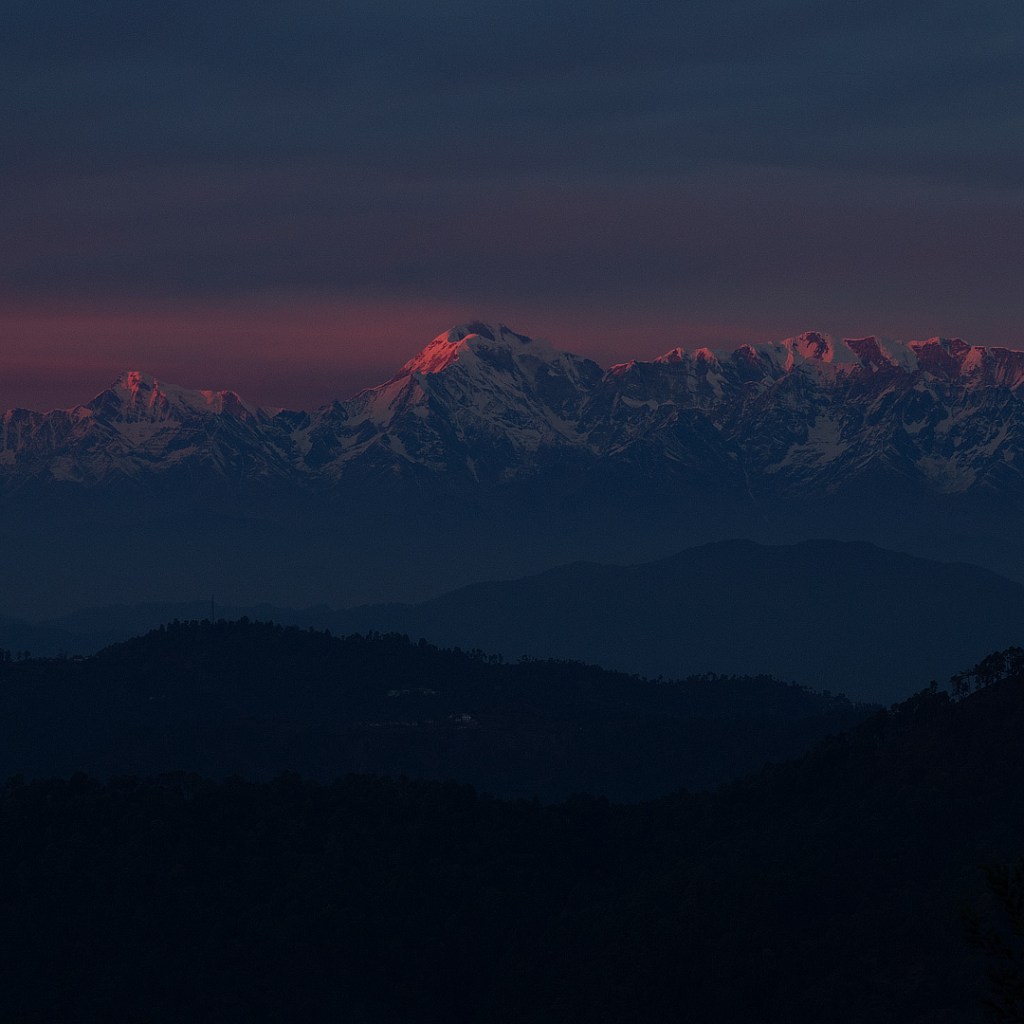
(Red light on Trishul Peak. This is not an over-processed photograph. Such colors do exist in nature. This was on one particular cloudy evening when the weather cleared up to give a few minutes of view at such a grand scene. I still plead guilty, as I have oversharpened a little to showcase the image properly on Instagram over tiny phone screens. -2 EV underexposed to show the scene as it appeared to the eye.)
Some traditional photographers like myself continue to struggle to preserve our style, or whatever remains of it, as well as our sanity. I wonder how long we can keep it up. Recently, a close friend who is a passionate bird photographer decided to quit Instagram and Facebook. While I don’t know the exact reason, I suspect this trend in photography might have been a contributing factor.
I have been typing out my thoughts, and now it’s already late in the day. Time for some work in the garden. So, ending this now. My advice to my readers and also to myself – Just don’t overdo it. Study the works of old masters and let those be the masterpieces we should aspire to.
This article, originally published on my photography site, is now archived here; while some details may have lost their original context over time, it still offers an intriguing read.
Complete list of archived content – Photography Articles
Discover more from Maini's Hill Cottages
Subscribe to get the latest posts sent to your email.
