
A few days ago, one of my readers suggested that, in addition to covering the basics of capturing night landscapes, star trails, and the Milky Way, I should also discuss the challenges and common mistakes involved. Each time I venture out to photograph nightscapes, something memorable happens. From simple mistakes to unforgettable incidents, every photo shoot is unique and offers valuable lessons.

(The night sky from Maini’s Hill Cottages)
The Leopard Lurks
One of the most interesting anecdotes from my night photography adventures happened last year. A friend of mine, an avid birder and superb photographer, visited me. His visit coincided with a no-moon night, and the skies were perfectly clear. We decided to venture out from the comfort of our cottage to capture some night photographs, free from the nuisance of light pollution. We loaded our photography gear, tripods, and some snacks into his car and drove to a nearby spot on the edge of the forest.
It was a cold and pitch-dark night—a boon for photographers. The conditions were ideal for capturing star trails without worrying about ambient light, and the low temperature helped keep the camera sensor cool, reducing noise.
We set up our tripods, mounted the cameras, and dialed in all the settings. I set the timed mode (one press to open the shutter and a second press to close it), manually focused the lens, and set the aperture for the desired depth of field. My little secret: I still use the DoF preview button, and a flashlight helps me set it properly even in the dark. My buddy did the same. Once everything was set, we were ready to work in complete darkness. We pressed the shutter release and waited.
While waiting, we heard a growl. Maybe it was just our imagination, but we were scared. We ran back to the car and sat inside. Thankfully, my friend had kept it unlocked, and no door light came on when we got in. Even a slight amount of light could have ruined the exposure. We waited inside for 15-20 minutes, the time needed for the exposure. Time passed slowly as we discussed leopards and planned how to retrieve the cameras. Saving the exposure was as important to us as getting our gear back. Switching on the car’s lights was out of the question. The plan was simple: each of us would quickly run to the camera, end the exposure, and run back to the car. Easier said than done!
I gathered all my courage and ran to the camera and back, successfully ending the exposure. My heart was racing. It took just a few seconds for both of us to safely return to the car, but it was an adrenaline rush.
Once we were safely back in the car, we turned on the headlights, flooding the scene in front with reassuring light. Still, we took no chances. We quickly gathered our gear and returned to the safety of the car. Inside, we packed everything into the bags, folded the tripods, and breathed a sigh of relief.
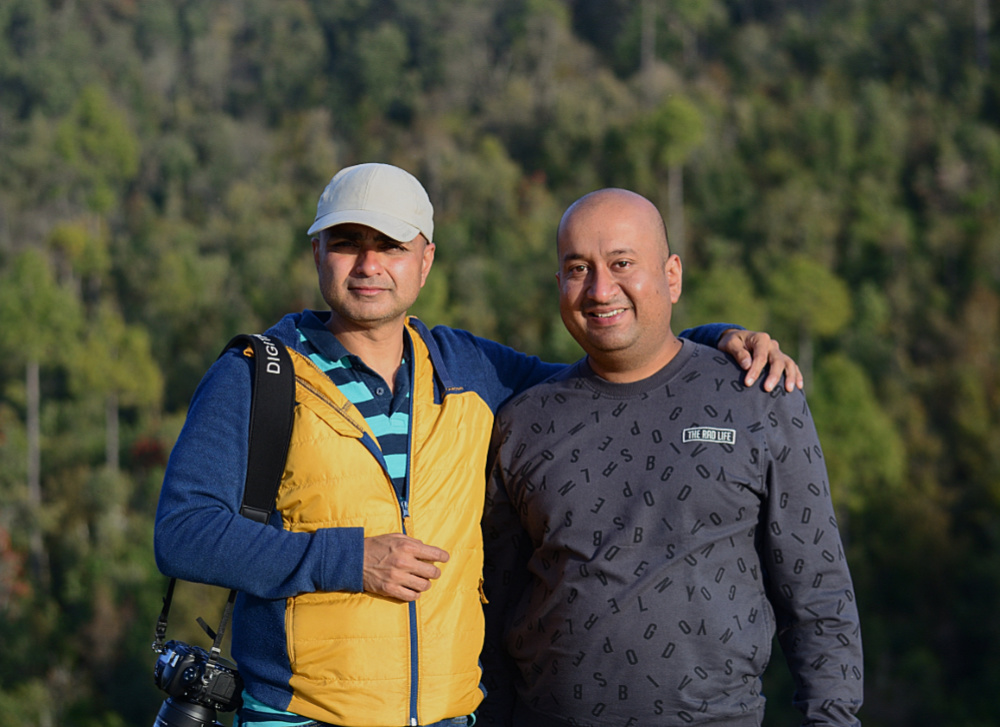
(My Buddy and Me. This was on the following morning, or was it the day before? Can’t say for sure… we did have a terrific time.)
Epilogue – The photographs turned out beautifully, capturing the night sky in all its glory. It had been an unforgettable night. The next morning, the villagers informed us that there had indeed been a leopard in the area where we had been photographing. It had killed a wild boar not far from our spot.
The Winter Night and a Bottle of Rum… Ho Ho Ho
It had snowed heavily throughout the day, and the snowfall continued into the evening. I sat alone in front of a dying fire, answering emails, my camera bag resting in one corner. Once I finished, I peered out the window. The snowfall was slowing down, the moon peeked through a break in the clouds, and the sky was starting to clear. This was enough to make up my mind—capturing a few night shots in the snowy landscape wouldn’t hurt.
I picked up my camera, mounted a wide-angle lens, and grabbed my tripod. Next, I bundled up. Maintaining my kind of hairstyle has its disadvantages; my head gets cold quickly. I found my trusted old woolen cap, perfect for such weather. Well-prepared to face the below-zero temperatures outside, I stepped out. With my feet sinking into the deep snow, I tottered to a spot that provided a beautiful night view of the valley.
Setting up the tripod in the snow was a challenge. I pressed it down as far as I could. It wasn’t as stable as on solid ground, but it worked well enough. I captured a few images before retreating to the warmth of the cottage. The cold was biting, and I didn’t have the will to stay outside for long. The solution was the bottle of rum that had been waiting to be opened. After a few gulps of the sweet rum, I ventured back outside with the camera. This time, I experimented with different compositions. It’s hard to see through the viewfinder in the dark, but the faint outlines of major elements helped in composing the shots.
After capturing more shots, I returned to the cottage. It was too cold to stay out any longer. I warmed up with another drink and previewed the images. To my dismay, they were all blurred! The brief time I had spent inside had caused the lens to fog up when I went back out. The photographs were all ruined. I simply formatted the card and let it go.
Did you notice my mistake? The shots from my first outing should have been fine. Fogging happens when moving from cold to warm, not the other way around. However, it was too late—I had already formatted the card.
Was that rum or just the tiredness from the day? Whatever it was, there was no going back. So… another sip of rum… and Ho Ho Ho.
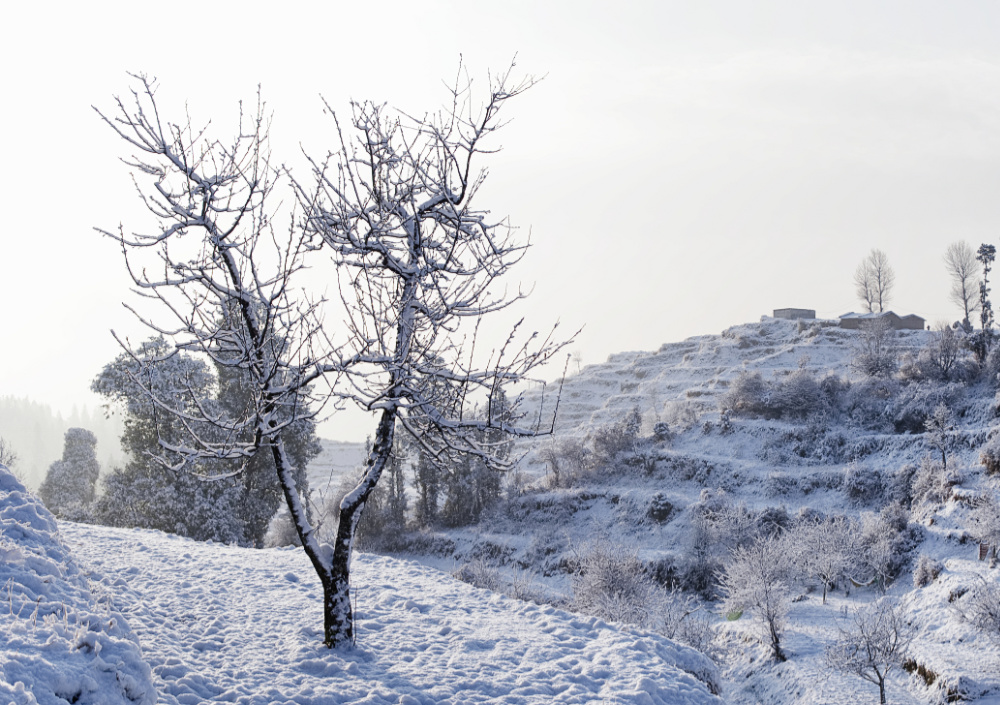
(This is from that same morning when the snowfall had just started. This I had processed in the daytime itself. Posting it here so as to not disappoint the readers waiting to see some snow)
Running After the Milky Way
My cousin and her family had come over for a few days. It was just after the rainy season, with clear skies and comfortable weather. They were interested in star-gazing, and I had the company I needed to enjoy some night photography. During long exposures, it’s nice to have someone to chat with to pass the time.
For the first shot, I planned to capture a star trail. I still prefer creating star trails in-camera using a single long exposure rather than taking multiple shots and combining them with software. I set everything up and pressed the shutter release, aiming for an exposure of about 45 minutes. We left the camera mounted on the tripod and walked back for an early dinner. After a nice, sumptuous meal, we chatted and then walked back to the camera. I pressed the shutter release button again to end the exposure.
Unfortunately, I had mistakenly set the exposure to ‘X’ rather than ‘T.’ The result: two dark shots taken a long duration apart! ‘X’ is 1/200 seconds on my camera, the flash sync speed. Both times I pressed the shutter release, it opened for just 1/200 second and then closed again. This mistake had happened to me before. Somehow, when I turn the shutter speed dial, I end up at ‘X’ rather than ‘T.’
By the time we came back from dinner, the Milky Way was starting to appear. It was now time for some Milky Way shots rather than star trails. I captured a few images from my lawn, and then we all walked over to their home, which was not far from mine. The view from their balcony was amazing. I captured more photographs from there. The best part about photographing the galaxy wasn’t just the photography itself but the discussions we had about the visible stars, planets, and constellations. It’s fun to admire these on a clear night and point them out to the group, much more so than photographing them alone.
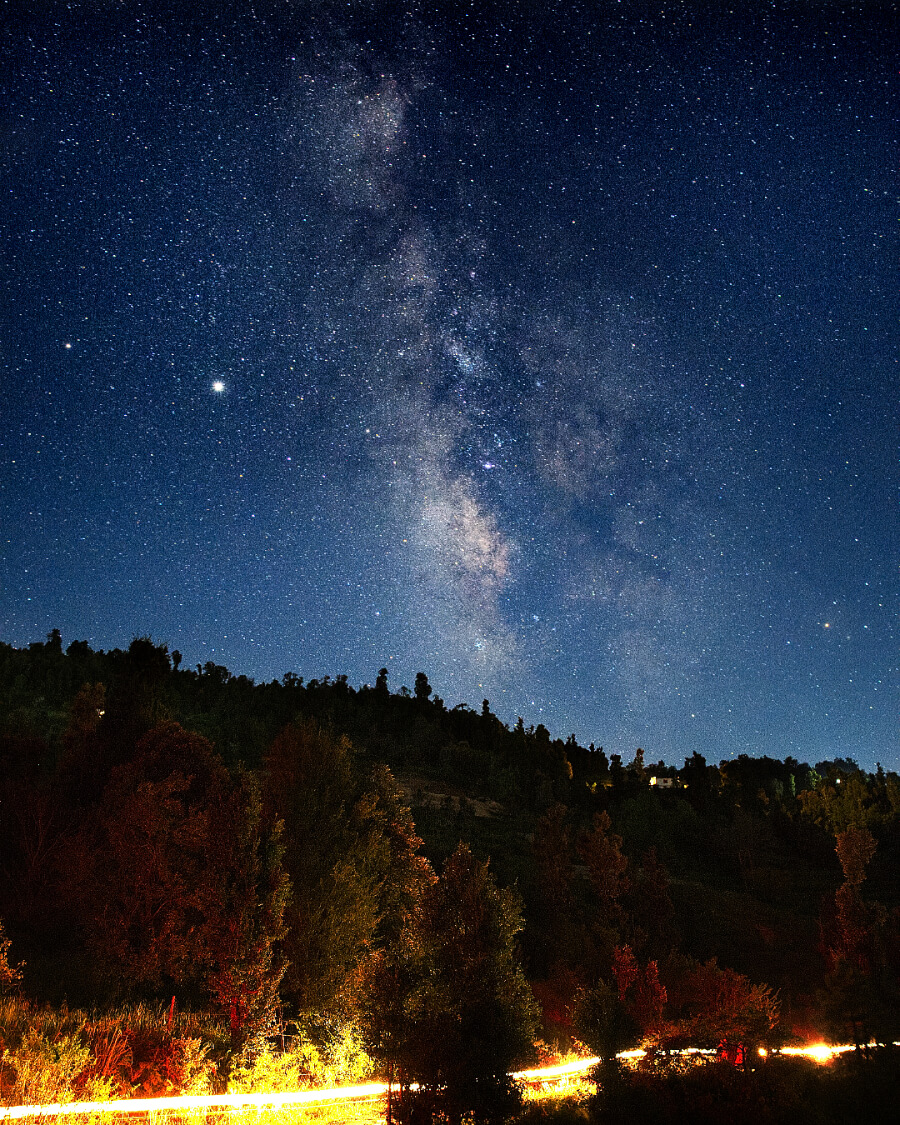
(That’s when a vehicle passed by on the road in front. The exposure had to be long enough to capture the complete trail and yet not let the stars move)
… and the day when Forest-Patrol caught a dumb animal!
This story goes back a long time, but I still love telling it because it was my first experience with the effects of bright light on a long exposure. This was back in the film days!
I had found a nice spot on a hilltop near Mangalore, a beautiful coastal town in southern India. It overlooked the valley, and every time I passed by, I could see the twinkling city lights and the sea beyond. I planned to take night photographs from this spot on a day when the sky would turn dramatic. And it finally happened!
After a thunderstorm, the sky was filled with dramatic cloud formations. I packed my Nikon FM10, an inexpensive film camera, and loaded my favorite film at the time, Fuji Velvia. This film always produced superb colors, and I knew how to handle its reciprocity failure (for those who have never used film cameras, don’t worry—reciprocity failure is long gone, as are film cameras).
I reached the spot around 8 PM. One of my friends was with me. The sky was full of scattered clouds, with a thin moon lighting them up from one side. The sea was calm, reflecting the lights from distant ships. The lights from the homes were unusually dim, which was to my advantage. My surroundings were completely dark, next to a forest area. Somehow, I always end up next to forests on dark nights.
I composed my shot and captured the first one. These were the film days—no preview screen or histograms to aid us. We had to be sure of the settings before pressing the shutter release. Rich photographers could afford to bracket their shots (varying the exposure across similar shots) as insurance against exposure errors. For most of us, exposure bracketing was an expensive solution. I captured a few more shots.
Then, while on my fourth or fifth shot, bright lights from a vehicle blinded me. A jeep approached with its headlights pointed directly at me. Without turning down the headlights, the occupants called me over. Once I explained why we were there, they turned off the headlights. It was the forest patrol. They told us there were poachers nearby planning to kill wild animals in the forest. We were instructed to pack up our equipment and follow them. They loaded my camera and tripod into the jeep, and I quietly followed them to a nearby outpost, where they returned my gear.
In hindsight, those forest patrol officers did catch a dumb animal that night—me. Maybe there were poachers around, maybe some beautiful animals roamed the forest, but what was certain is that they made me follow them all the way to their outpost.
And yes, the film was fogged. Even the exposures I had taken before the interruption were ruined. To this day, I suspect someone opened the camera in the jeep, but one of my peers tells me that severe fogging can sometimes affect neighboring frames too.
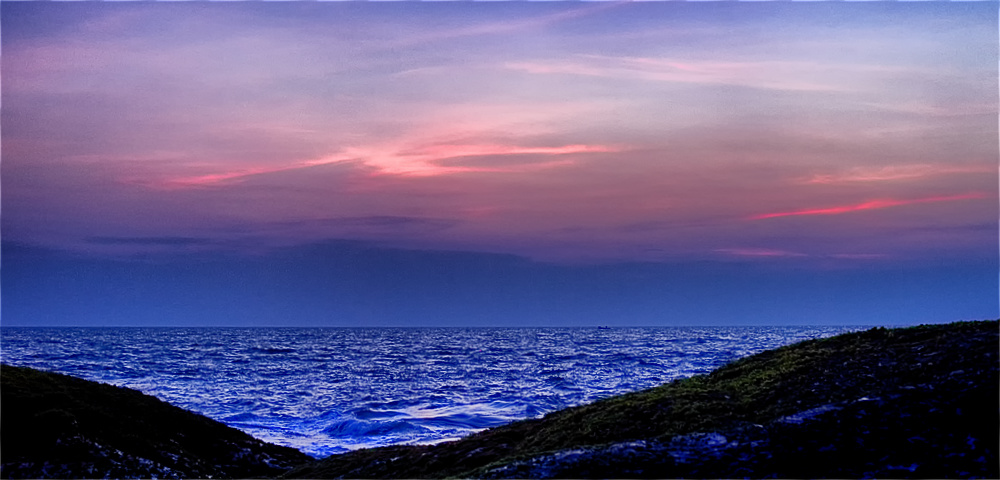
(Once again, I don’t have a photograph to share from that night, but this is another photograph of the sea, not far from that forest)
Let us plan some night photography together. Get in touch with me.
… and remember – Stuff Happens!
This article, originally published on my photography site, is now archived here; while some details may have lost their original context over time, it still offers an intriguing read.
Complete list of archived content – Photography Articles
Discover more from Maini's Hill Cottages
Subscribe to get the latest posts sent to your email.

Wow, sad that I was not present at any of these moments with you. Will surely plan something like that next time and just wish for some stuff to happen 😊- excellent read!!! Thanks Dr Shivam !!
LikeLike
Amazing photos Dr Shivam.
I thoroughly enjoyed your photography escapades too. I admit the nighttime shooting with the leopard was an impressive dedication to your craft 😉😂
LikeLike