
Hills have always drawn me in, but there’s something especially captivating about the sight of distant snow-covered peaks. Every winter, these glimmering white summits become my favorite photography subjects. With each peak, varying weather conditions, and different times of day, the landscape is constantly changing. Every day offers a fresh perspective and a new subject to capture.
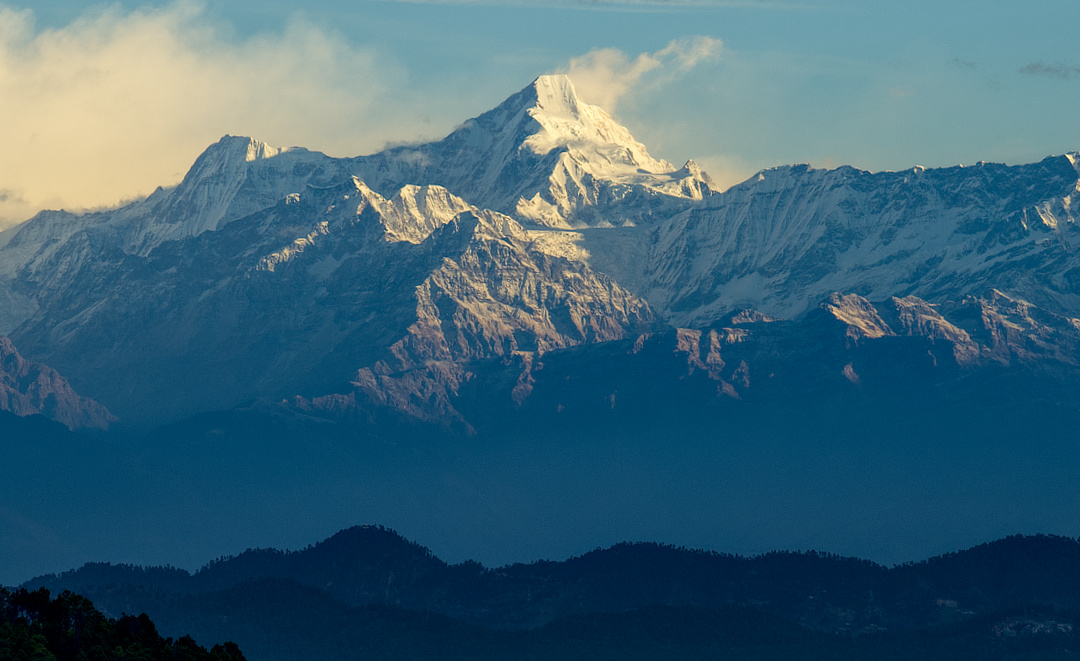
(Is that an early morning snow storm on the peak that I just captured?)
A friend of mine once asked why I always end up photographing these peaks from a distance rather than venturing out to explore them up close. Well, that’s a pursuit for the more adventurous souls. I prefer the comfort of my home, stepping out to capture the peaks only to return to my cozy space. If those snow-covered summits were my calling, I might have been a trekker or even a mountaineer—but I’m not. I’m a photographer, deeply moved by their beauty, but content to admire them from a safe distance.
As I drive along the winding roads of these foothills, I’m constantly greeted by landscapes that beg to be photographed. Living in our homestay, where the peaks are visible right from the windows, I have the privilege of capturing them often. Whether I’m at the cottages or traveling to Almora and nearby towns, each place offers a unique view, adding to the endless variety of scenes I can photograph..
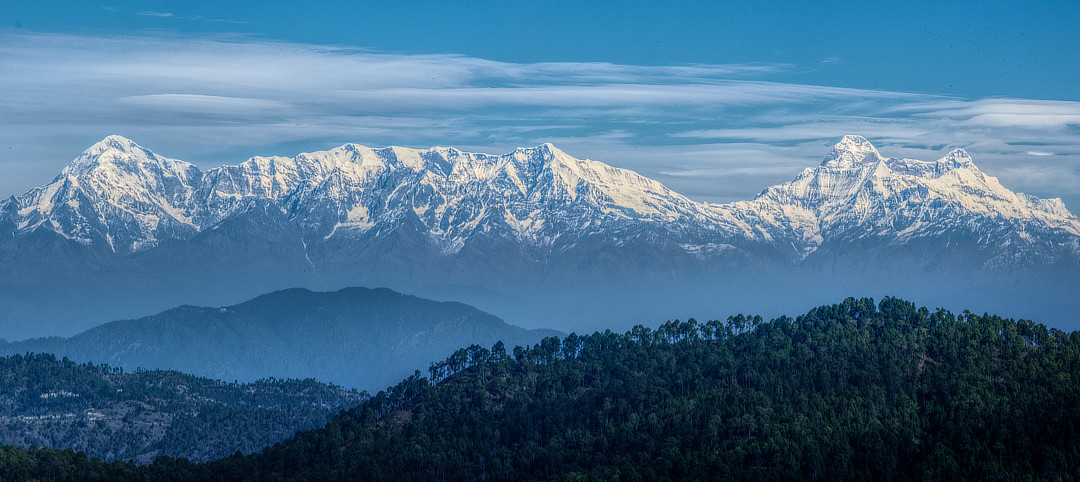
When I photograph these peaks, my mind is flooded with thoughts. I’m usually alone on these trips, quietly setting up my camera while the chilled breeze brushes against my face—a sensation that’s truly something to experience.
Recently, a friend joined me with his mobile camera. Unfortunately, mobile phone cameras tend to have lenses that are too wide, making them less ideal for capturing these kinds of shots. Not wanting to disappoint him, I handed him my second camera body, along with a flurry of instructions—though I’m not entirely sure he grasped them all. I’m writing them down here, just in case he happens to read this article.
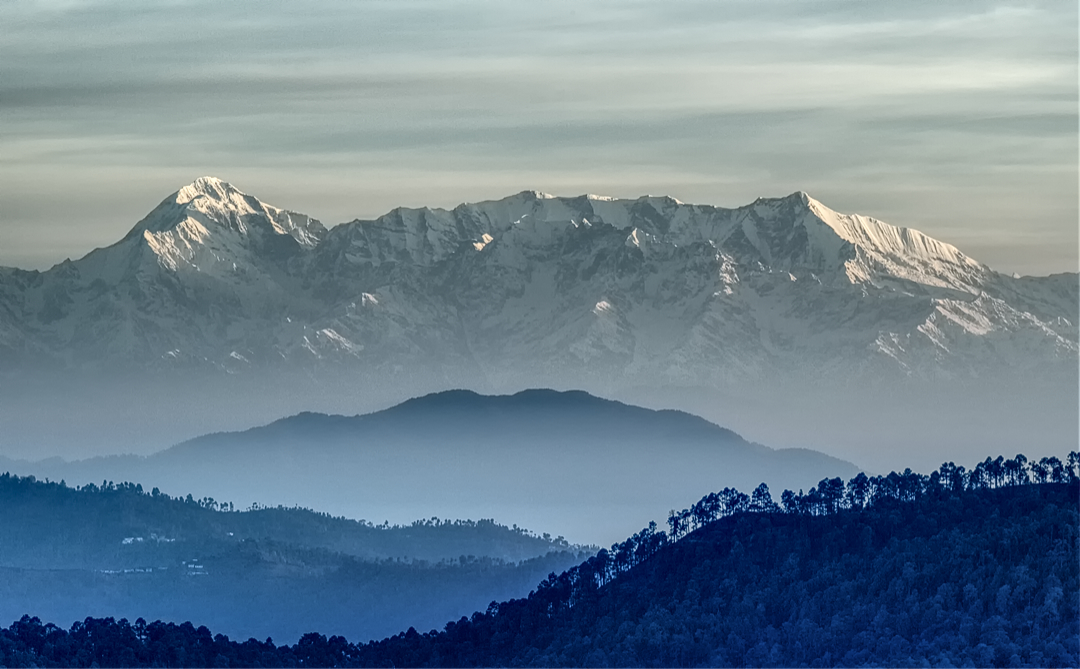
(Sunrise on hills – during early autumn, photographed from Maini’s Hill Cottages)
Basics
Most snow-capped landscapes may look stunning to the eye, but when it comes to capturing them, the challenge lies in the low contrast of these scenes. If you observe the histogram of such exposures, you’ll notice that most of the data is concentrated in a narrow range, requiring correction in post-processing. However, this adjustment can introduce various artifacts.
The first step is to set your camera to the lowest ISO—typically ISO 100 for me. This minimizes noise, which is crucial when dealing with such delicate contrasts. Even with new cameras that have a range of native ISO, I prefer the lowest ISO since as it is the peaks are too bright for higher ISOs.
Next is the exposure. I recommend exposing slightly to the right of the histogram, as this further reduces noise and captures more detail.
When your landscape includes a foreground, there’s often a risk of either the snow-capped peaks being overexposed or the foreground underexposed. While many modern photographers suggest using exposure bracketing to create an HDR image, I’m more traditional—I still prefer using a graduated ND filter, particularly square filters that allow for vertical adjustments.
Ensure your shutter speed is faster than the inverse of your focal length (1/focal length) to minimize camera shake. Even slight shake can result in a soft image, which is something you want to avoid. Keeping the camera steady is key.
Use a medium aperture. A wide aperture might not provide enough depth of field, especially if your composition includes a foreground, while a very small aperture could soften the image due to diffraction. A mid-range aperture will help you get the best out of your lens.
Finally, always shoot in RAW and post-process your images. If you’re still not shooting in RAW, you’ll thank me later!
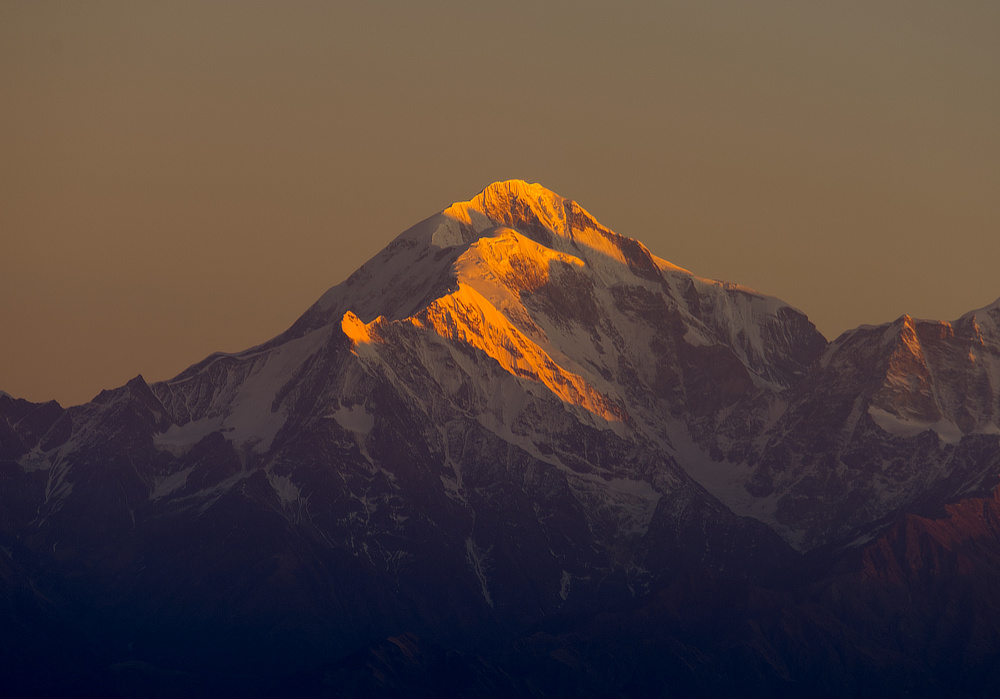
(Early morning on Trishul, when the first few rays of golden sunlight lit up the peak)
Panoramas
The hills stretch far and wide, making them ideal subjects for a sweeping panorama. To truly capture their grandeur and beauty, a wide panorama that can be printed as a large-sized print is ideal. Anything less risks undermining their majesty.
There are two straightforward methods to create great panoramas. One option is to capture the scene with a normal to wide-angle lens and then crop the top and bottom. The other method is to capture multiple images and stitch them together.
While cropping can lead to a drop in image quality, it’s perfectly acceptable for sharing on the web, with friends, or even for printing in photo albums. However, if you’re aiming for high-quality or professional results, stitching multiple images is the better approach.
To achieve the best results when stitching images, keep a few basics in mind. Use a short telephoto lens and shoot in RAW. Set the focus, aperture, shutter speed, and ISO manually, and ensure these settings remain consistent across all shots meant for the panorama. Even minor changes, like altering the shutter speed, can affect the quality and exposure consistency, which is crucial for a seamless panorama. Mount your camera on a tripod for stability, and capture your images by moving horizontally, ensuring at least 1/3 frame overlap between shots. It’s important to work quickly, especially in dynamic lighting conditions like sunrise or sunset, where the light changes rapidly.
For those serious about panorama photography, consider borrowing a panorama head to further refine your technique.
For processing the images, I currently use Affinity Photo (which I highly recommend). The process is simple—just launch the program and use the shortcut Ctrl+Alt+Shift+P to bring up the panorama creation screen. After the panorama is stitched together, you may need to do some minor cloning or healing to perfect the final image.
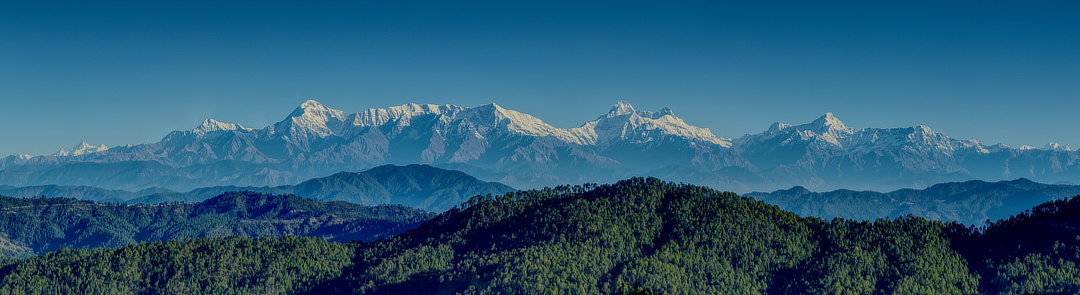
(This was created using three raw images captured hand-held using Zeiss 135mm lens on Nikon full-frame body, stitched using Affinity Photo)
Going beyond snap-shots
Capturing the scene before you is straightforward, especially when the beauty of these peaks naturally makes each shot worth keeping. However, to truly make an impact, your photographs need to go beyond mere snapshots.
Incorporating some foreground elements can add depth to your images. I often include the darker hills in the foreground; their subdued tones don’t overpower the main subject—the snow-covered peaks—but they do enhance the overall impact of the image. Clouds can also play a vital role. When the peaks rise above the clouds, the effect can be mesmerizing, adding both depth and a sense of grandeur to the photograph.
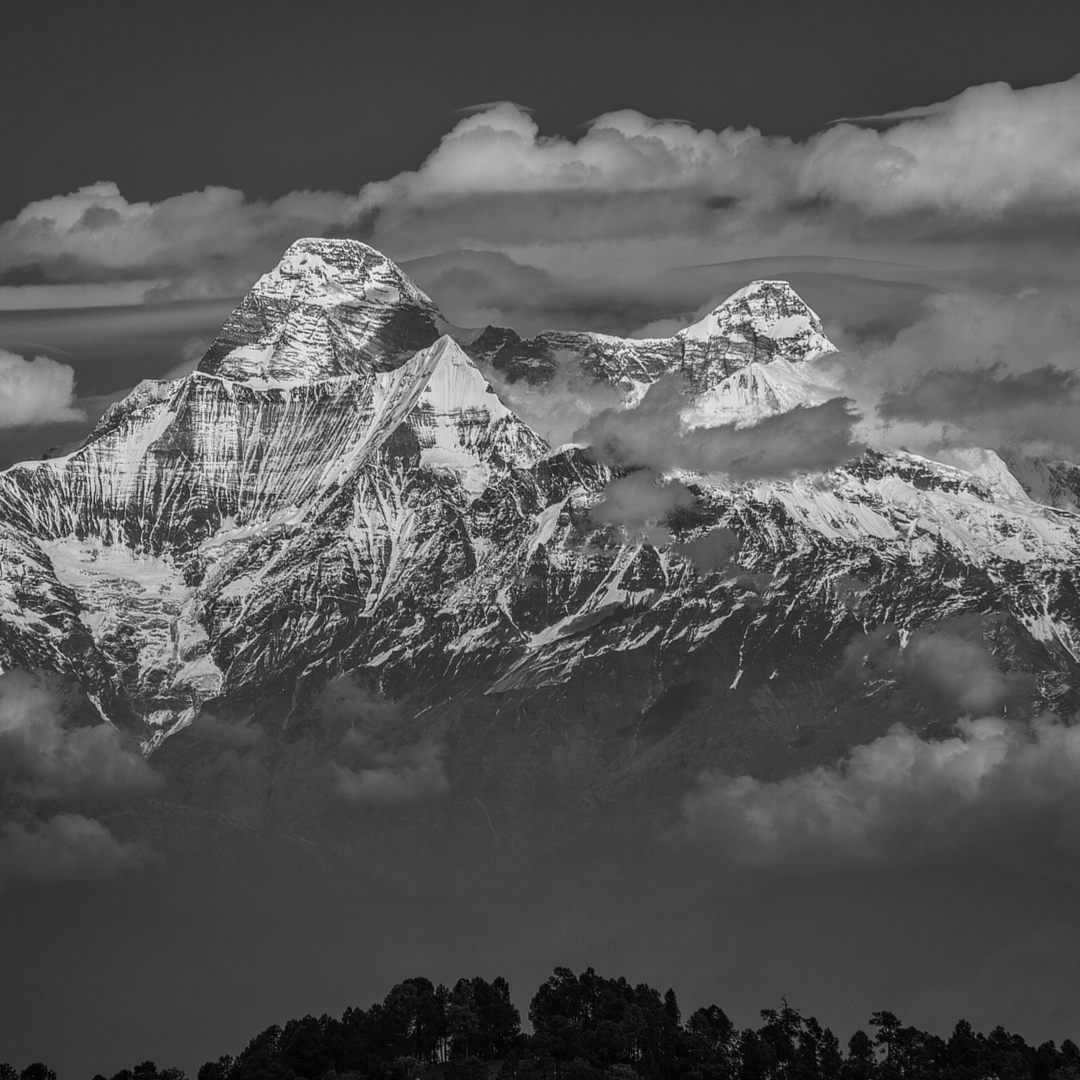
(This square format image was used on my Instagram account. Nanda Devi peak with clouds and a foreground in silhouette)
My favorite snow-peak photos were captured in the early morning or late evening hours, sometimes even long after the sun had set. Timing is as crucial in photographing these mountain peaks as it is with any other landscape. During these hours, when the sun is low on the horizon, the mountains take on a distinct character. Their peaks look stunning, and the colors can seem almost otherworldly.
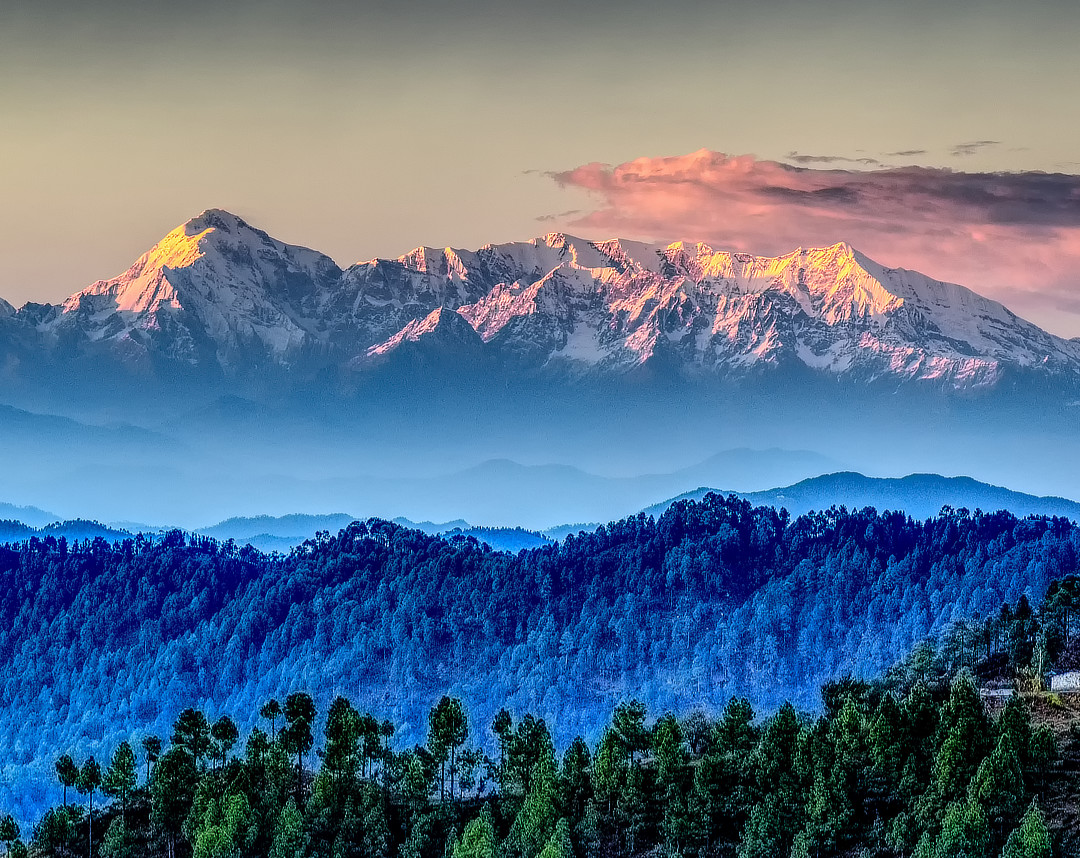
(View of the hills from Maini’s Hill Cottages – these psychedelic colors were actually there on one fine evening. Some more time and they would turn deeper in shade.)
Many a time, I have witnesses Alpenglow or the phenomenon where reflected light lights up the peaks. The peaks turn pink to deep orange. This is also fun to observe and photograph.
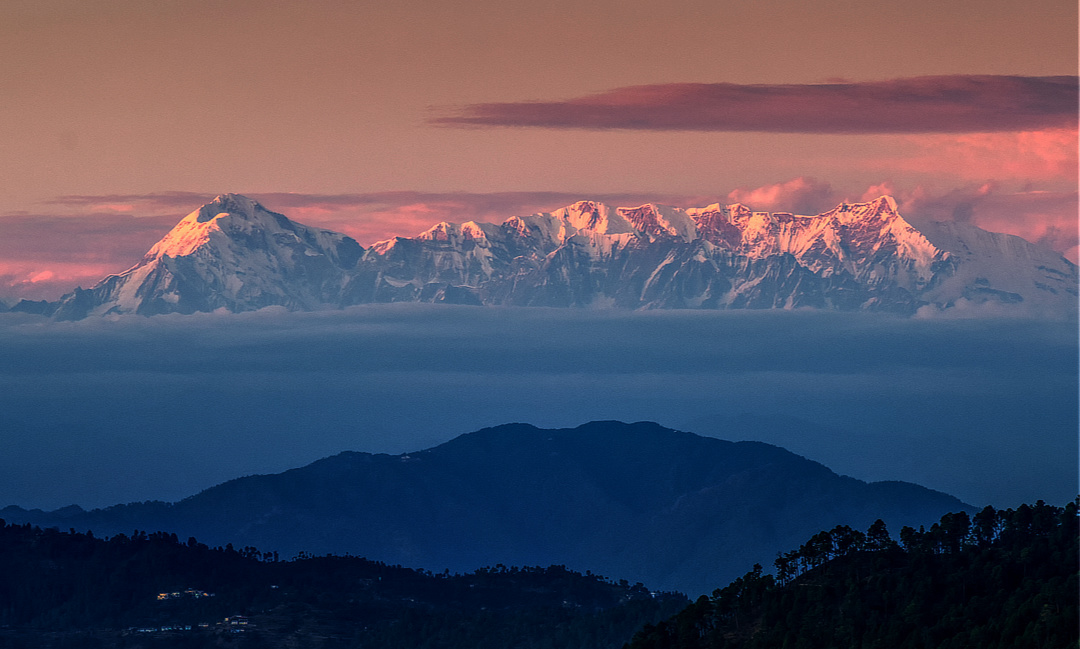
(The pink-orange peaks in the late evening. Notice the houses on the left side of the foreground, they have their lights also on)
What I am planning to photograph next is these mountains during night time when the moon is almost full. The white peaks appear grand against the dark sky. Now on one of these days, I’ll do this. The challenge would be to stay out at night when the temperature goes below zero and capture these beauties. If you want to accompany me, just let me know. We can plan a photography session and carry some hot coffee in a flask.
This article, originally published on my photography site, is now archived here; while some details may have lost their original context over time, it still offers an intriguing read.
Complete list of archived content – Photography Articles
Discover more from Maini's Hill Cottages
Subscribe to get the latest posts sent to your email.

Nice shots & notes.
LikeLike
Fantastic images of snow claded mountains with excellent write up .Thanks for sharing.
LikeLike