
Johannes Vermeer was a Dutch painter known for his limited but exquisite body of work. Despite painting only a few pieces and never traveling far from home, he remained relatively obscure until some prominent figures recognized his talent. For photographers, Vermeer’s paintings serve as both inspiration and a valuable source of learning.
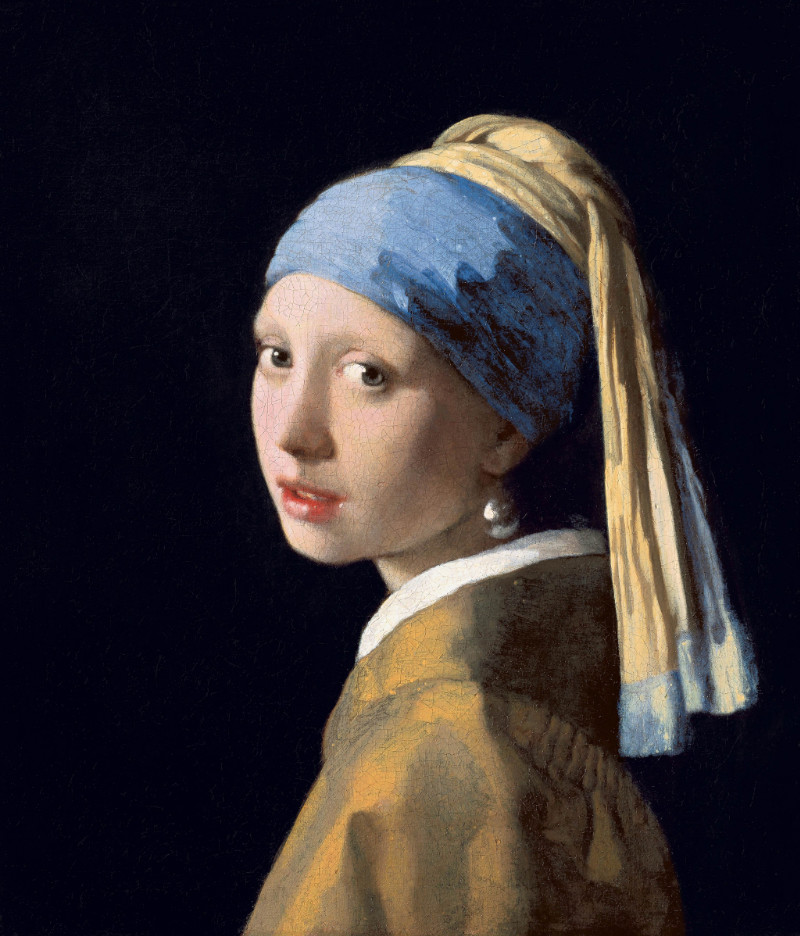
(Girl with a Pearl Ear-ring. One of Vermeer’s most famous works!)
He would have been a photographer today !
Before I start to describe his works from a photographer’s perspective, let me tell you that had he been born in today’s world, he would have been a photographer. Why I say this? He had a taste for using the finest pigments in his paintings and considered the whole scene in a very realistic way. Some theorists have even said that he used some combination of optics or maybe even a camera obscura to help him paint such realistic depictions. I am leaving it up to you to search his paintings and analyze his work. Maybe he was so gifted that his works turned out so realistic.
Anyway, back to my understanding of his works –
Indoor Scenes and Use of Light
Vermeer was not a very affluent painter and his works also revolved round the indoor life of most middle class families of his time.
Most of Vermeer’s paintings feature a single natural light source illuminating the subjects, typically coming from a window. This side-lighting from a large window served as a semi-soft light source for the other elements in his work. Vermeer favored lighting his subjects from the left side of the frame—perhaps it was his preferred style, a result of the lighting in his home, or simply what he felt comfortable with. Regardless of the reason, what I’ve learned as a photographer from his approach is that it doesn’t matter how many photographs you take with the same lighting style; what truly matters is that they are strong compositions that tell a story.
Interestingly, Vermeer’s paintings that had a visible source of lighting, like a window, had the level of light a little less so as not to make the scene uncomfortable to look at. The paintings with hidden source of light (hidden by curtains or by simply being out of the frame), the light was comparatively strong. He knew what kind of light source to include in the painting.
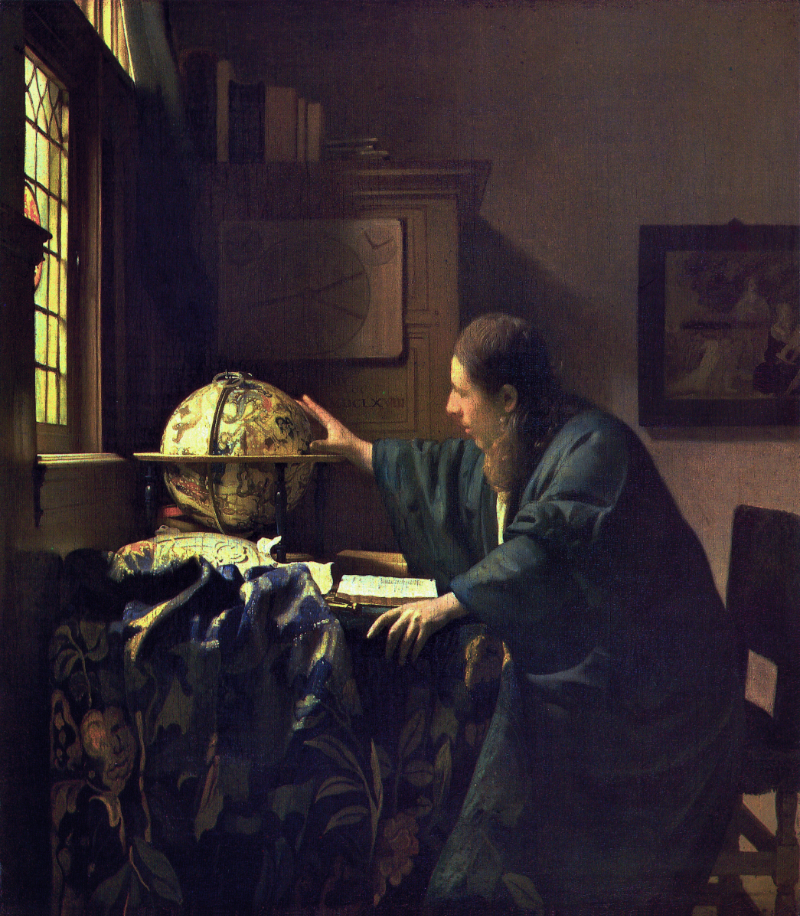
(The Astronomer – Notice the light from the window and how it lights up the whole scene. The window itself is yellowish in color or not overblown in photographer’s language)
The Astronomer painting above was followed by another similar painting ‘The Geographer’. The same location, same lighting style and yet another painting (Some experts also comment ‘same model’). What is preventing you as a photographer in using the same lighting and same set-up to create yet another photograph… an improved version of the first one.
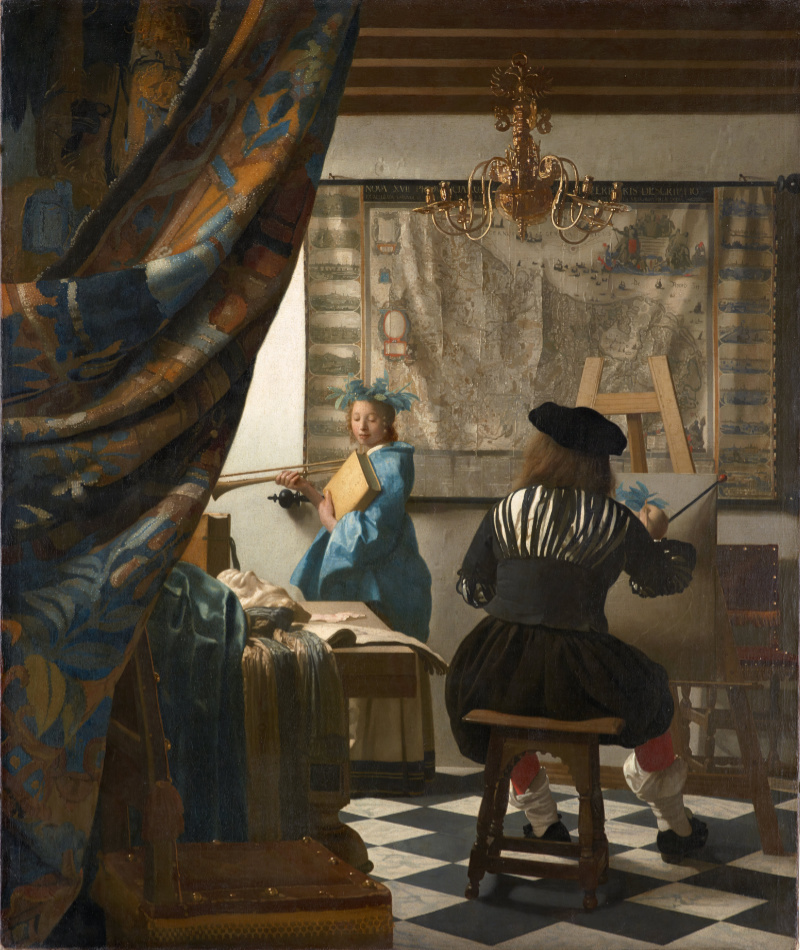
(The Art of Painting – Another painting with an indoor scene with left sided lighting. The curtains on the left hide the bright source of light, preventing any ‘blown out highlights’.)
Vermeer paid extra attention to how the light fell off across the frame and how a fall in light affected the visible textures of various elements in his painting. Clothes that were either close to the viewer or had a slanting light falling on them, showed their texture. Floor tiles in the areas of light had a texture to them whereas in the shaded areas the texture was lost.
Is that not we should also be trying to photograph? A perfect exposure to me means an exposure where highlights are not overblown, shadow areas have some details and above all, the textures are visible. The textures provide the realistic feel to photographs.
Not his usual style ?
There are some paintings which expert don’t consider his usual style, his ‘genre’! To me, these also reflect his thoughts and his way of seeing things.
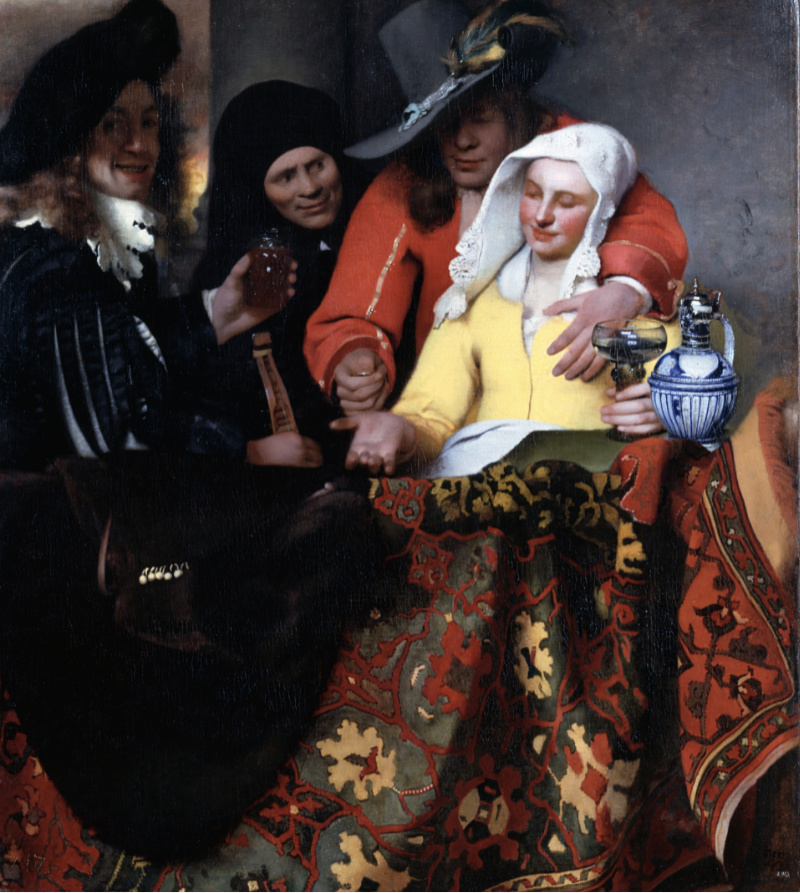
(The Procuress – Though it misses the obvious light source, the lighting style is similar. There seems to be a bright point source on the left and front along with a larger soft light source also on almost the same location. The point source is lighting up the musician’s lower face and collar, and then casting his shadow on the wall behind. The soft light lights up the remaining scene. The rich texture on the cloth adds the painting)
For those of you seeking more into the way he lit this scene, try to see the original painting or a detailed large sized image. The bottle that the musician is holding and the neck of the goblet that the girl is holding, show three sources of lights. Two point and one slightly diffused!.
… and for the trivia fans – the ‘musician’ may just have been the self portrait of Vermeer.
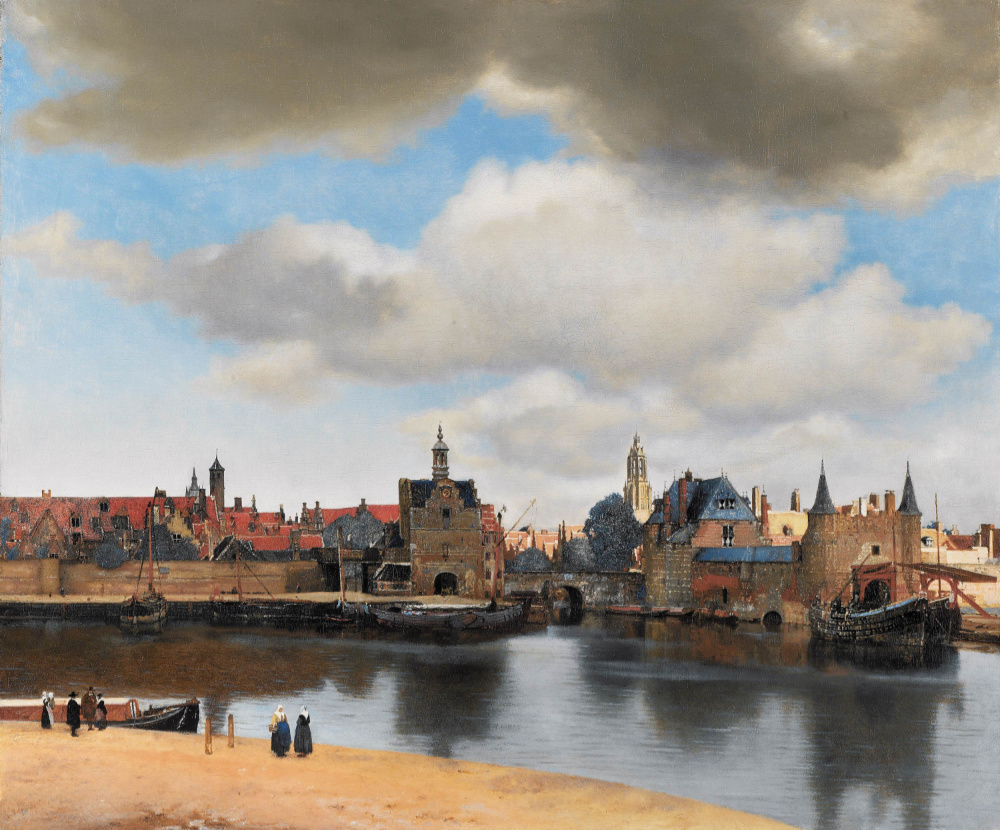
(View of Delft – A shift from his usual indoor scenes from middle class houses)
Despite the shift in subject, his lighting has remained similar. This small reproduction does not do justice to his work. Try to check out at least a large sized reproduction of this one.
The light in the foreground is dark and diffused by the clouds above. Even the shadows of the people standing in the foreground tell the same story. The houses on the riverside are also dark. In contrast to this, the houses in the distant are lit by the bright sunlight. A wonderful example of how he mixed up soft and harsh lighting.
Another interesting aspect is how some of the water is blurred showing some amount of motion. This was much before the cameras were used and ND filters came into existence!
Do check out his paintings here (if can’t visit the museums or find high quality reproductions) – List of Paintings by Johannes Vermeer (Wikipedia)
Further Reading:
Learning from Rembrandt
Learning from Monet
This article, originally published on my photography site, is now archived here.
Complete list of archived content – Photography Articles
Discover more from Maini's Hill Cottages
Subscribe to get the latest posts sent to your email.
